
Last updated September 10, 2026
Level 1 sweep and inspection to the NFPA 211 annual standard - flue, crown, cap, and flashing checked and photographed
Chimney sweep logs do not sweep chimneys. They loosen some creosote - which then falls where a brush and vacuum still have to collect it.
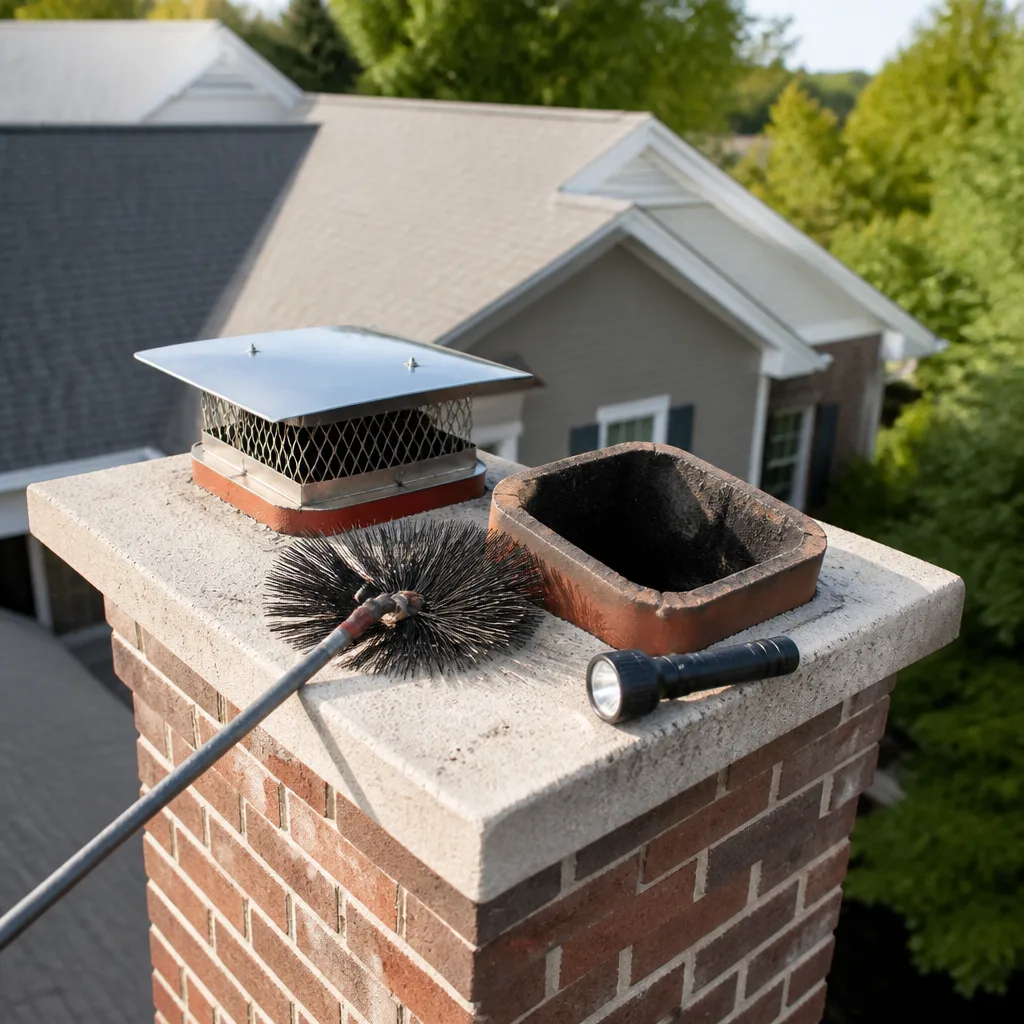
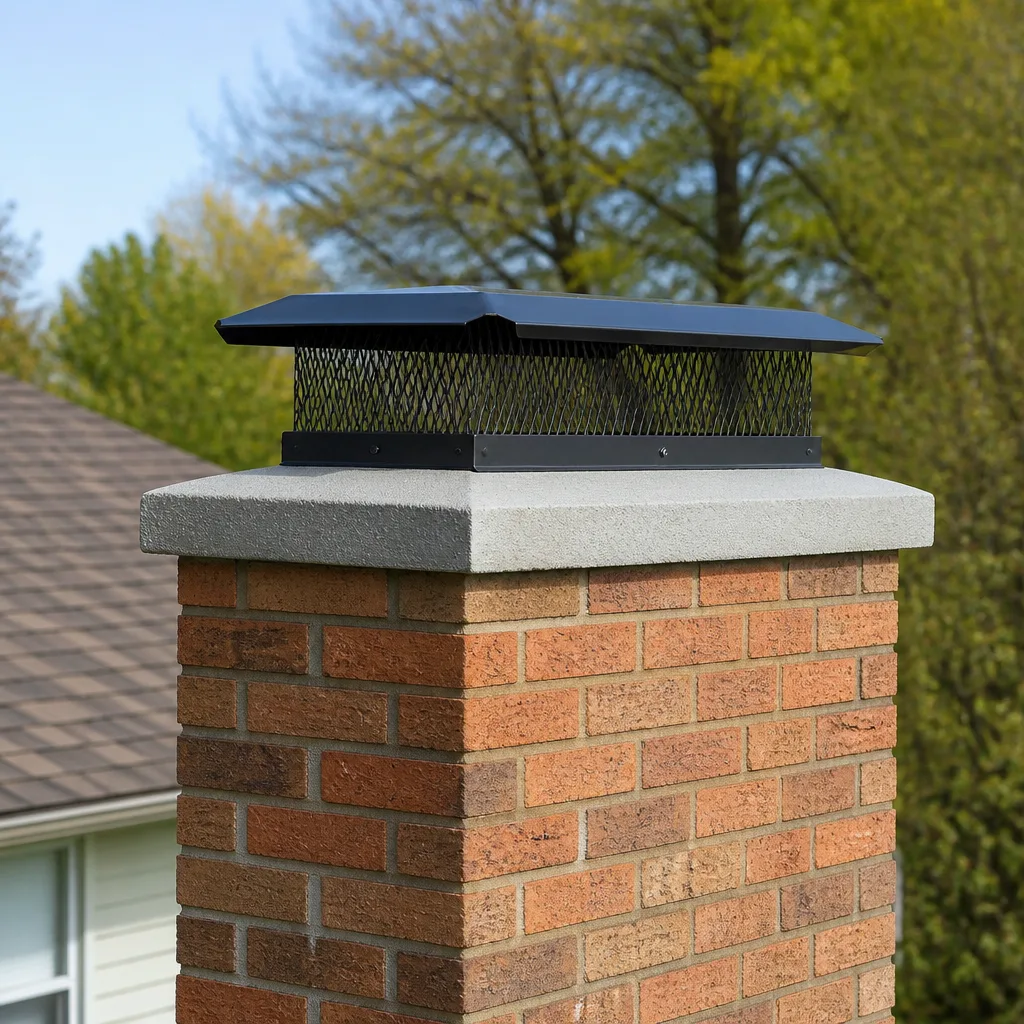
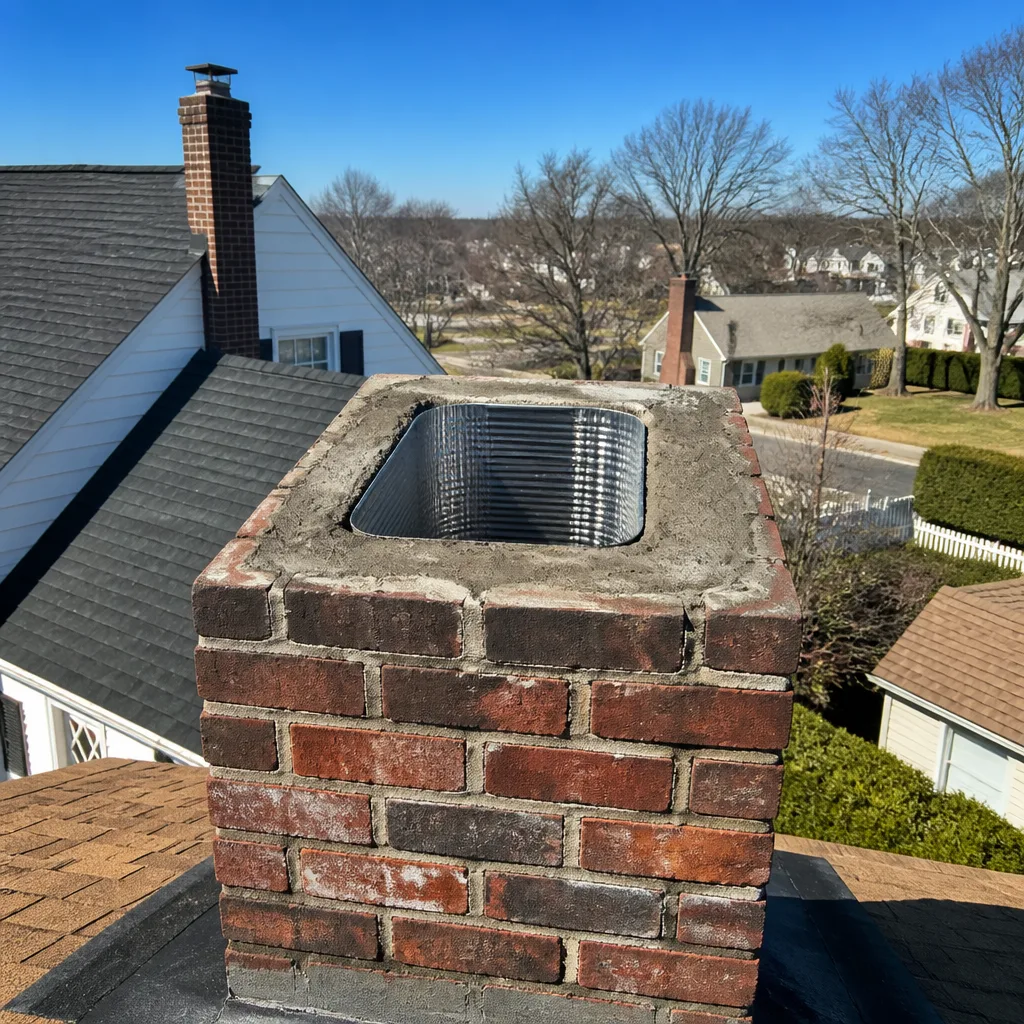
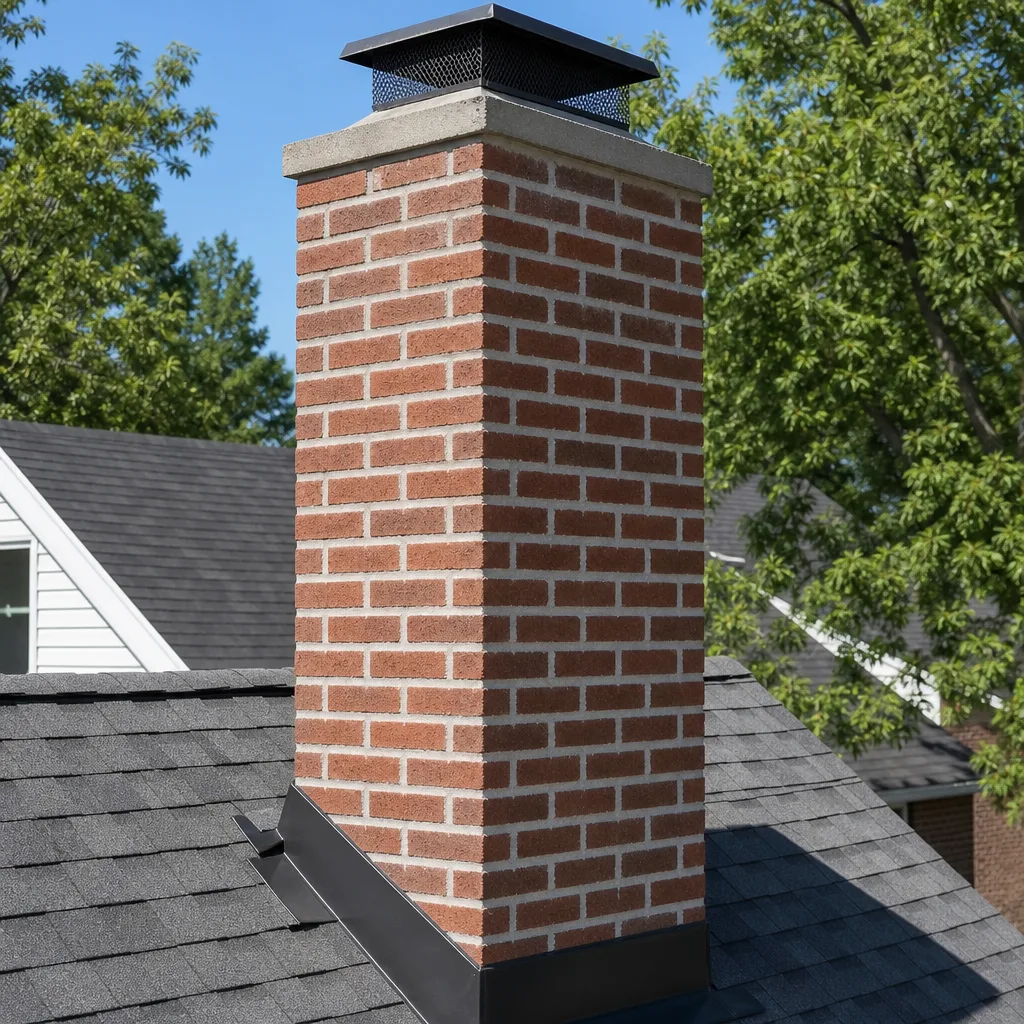
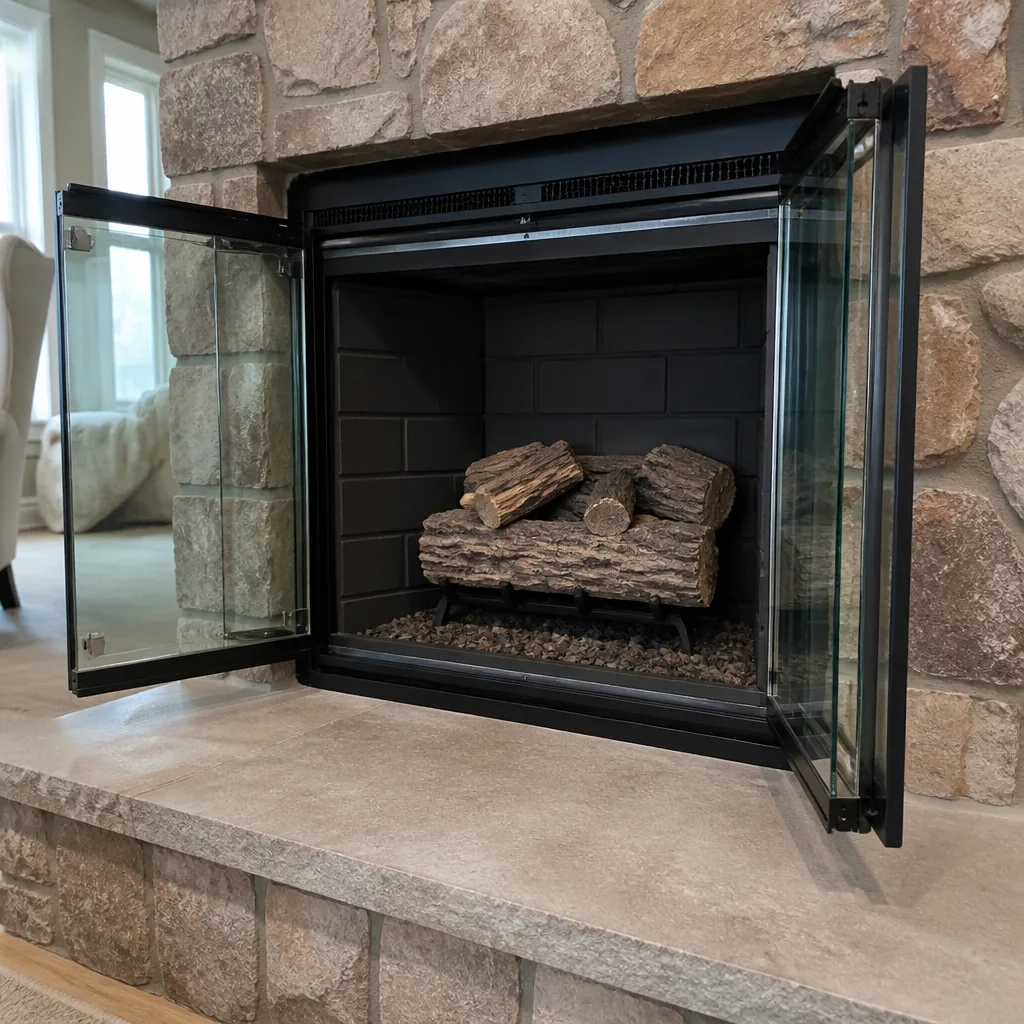
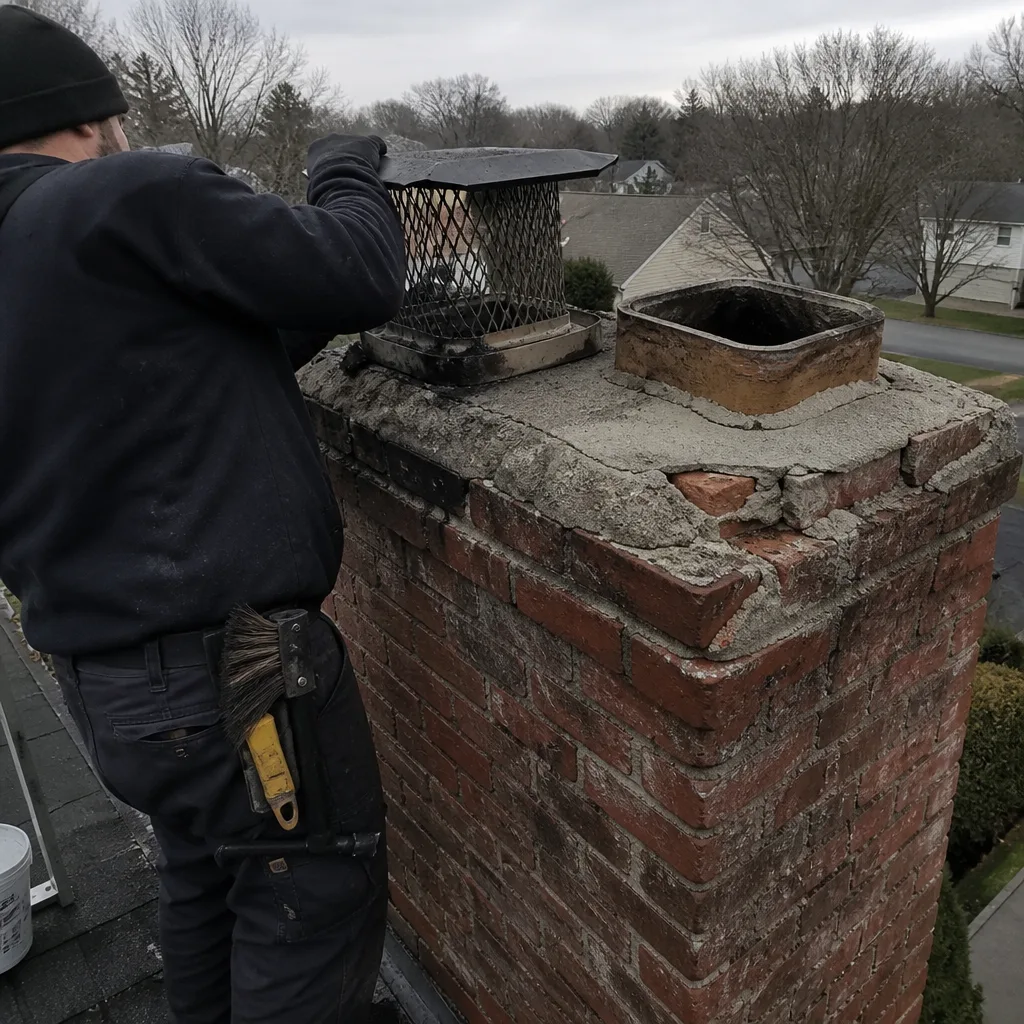 Before
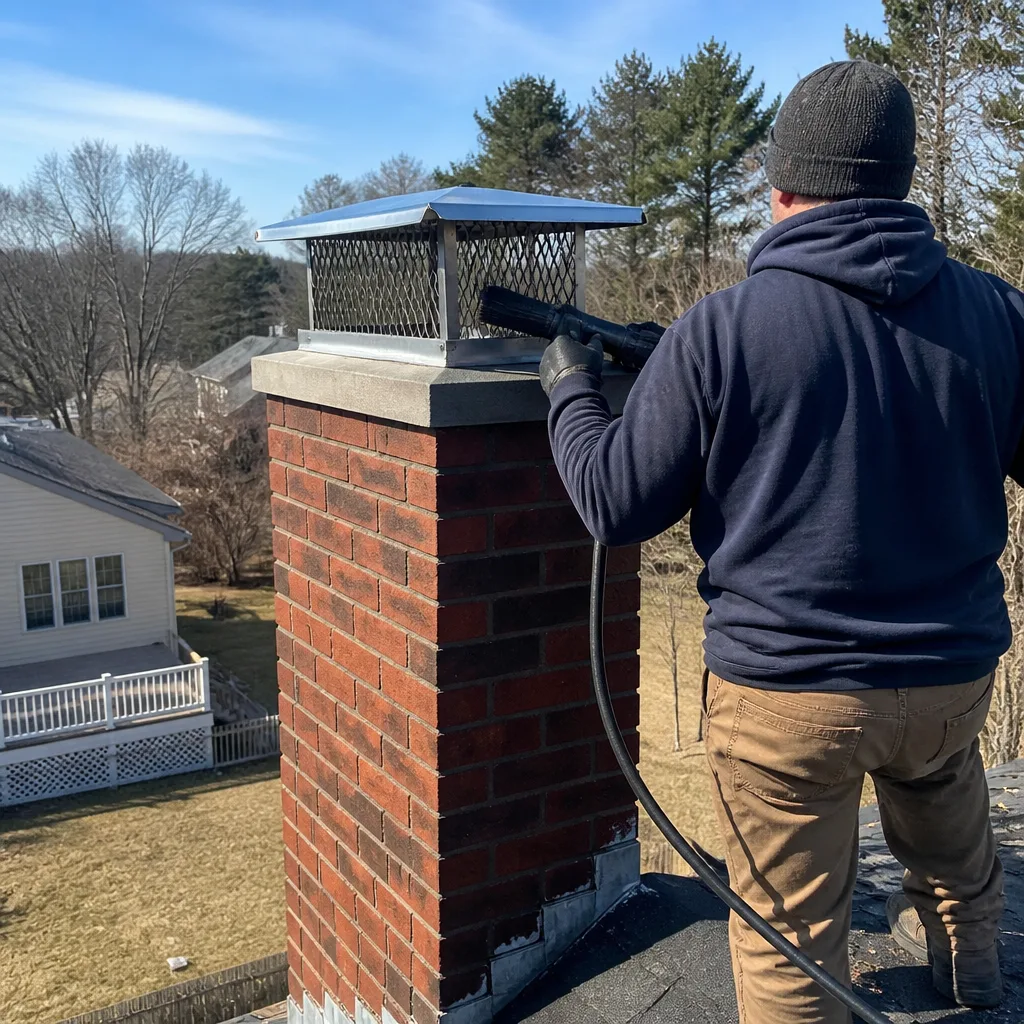 After
After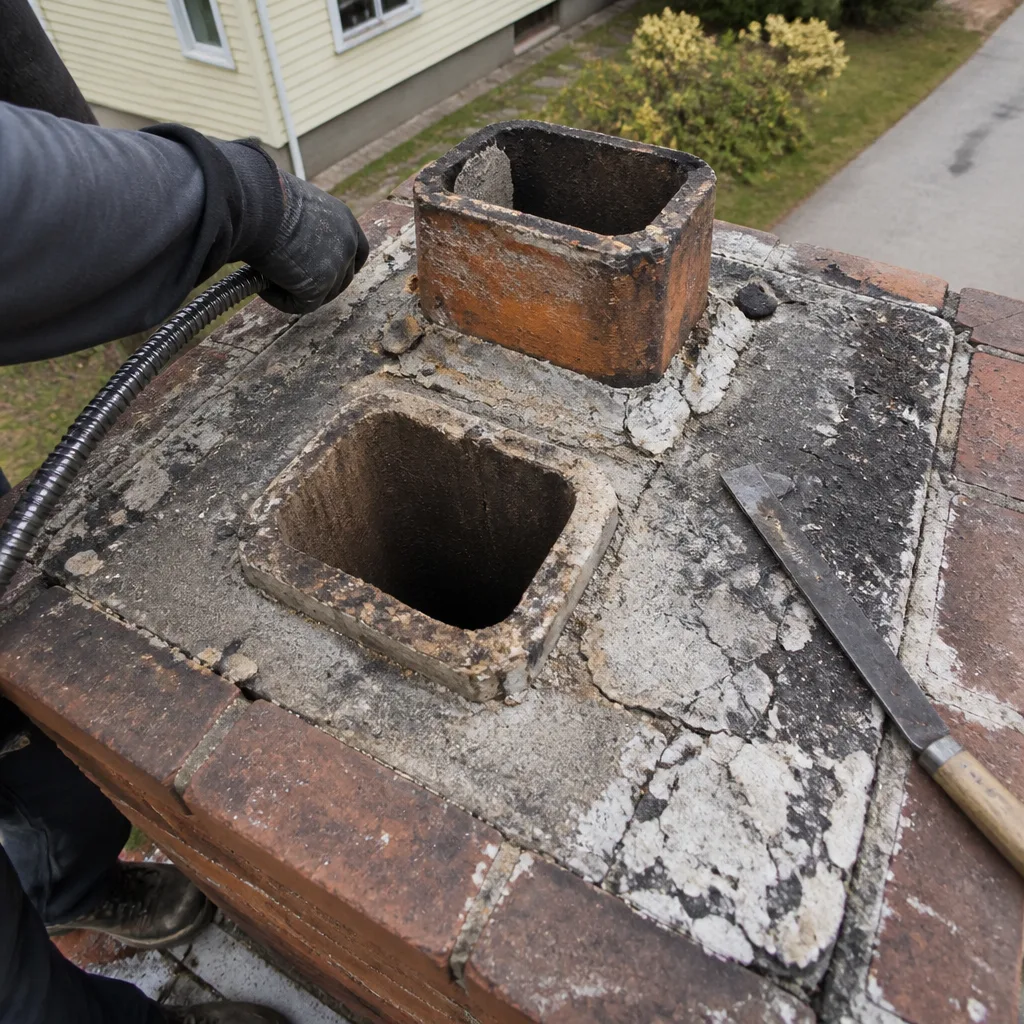 Before
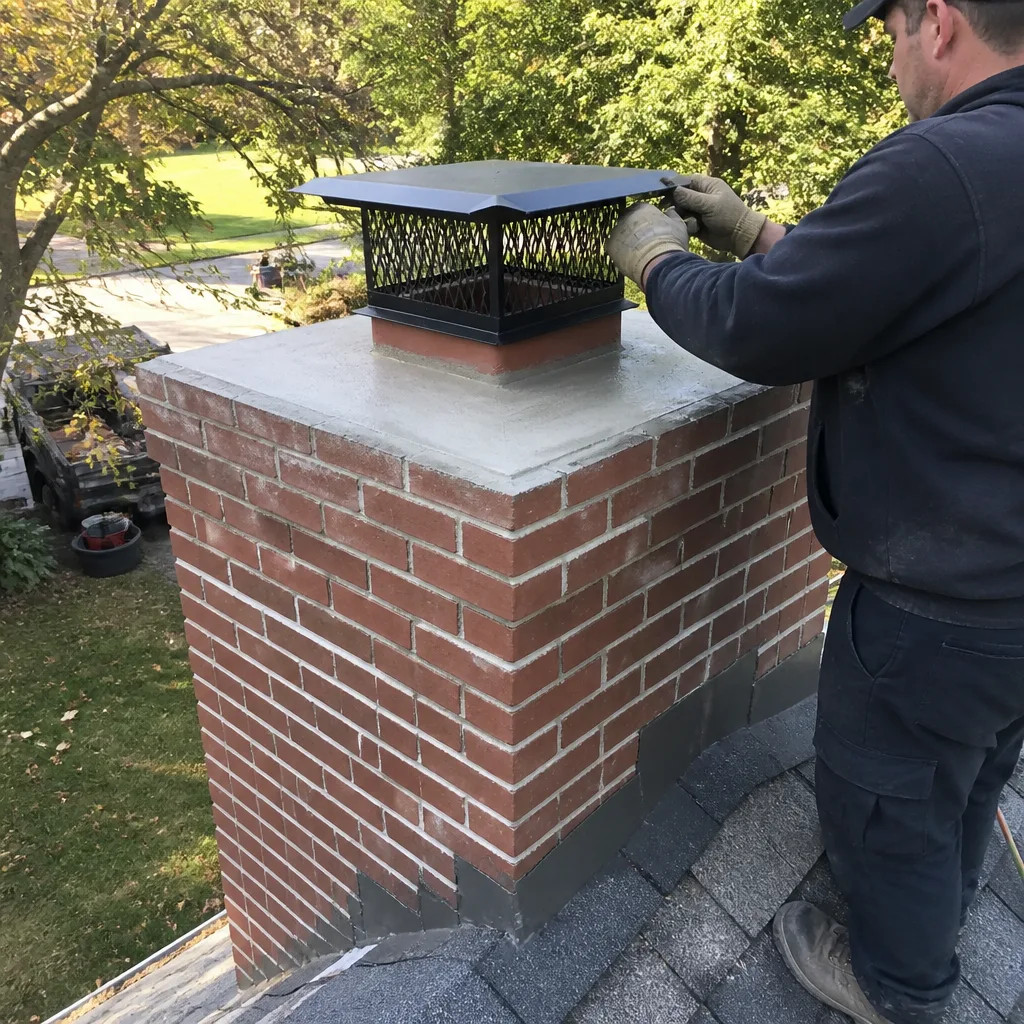 After
After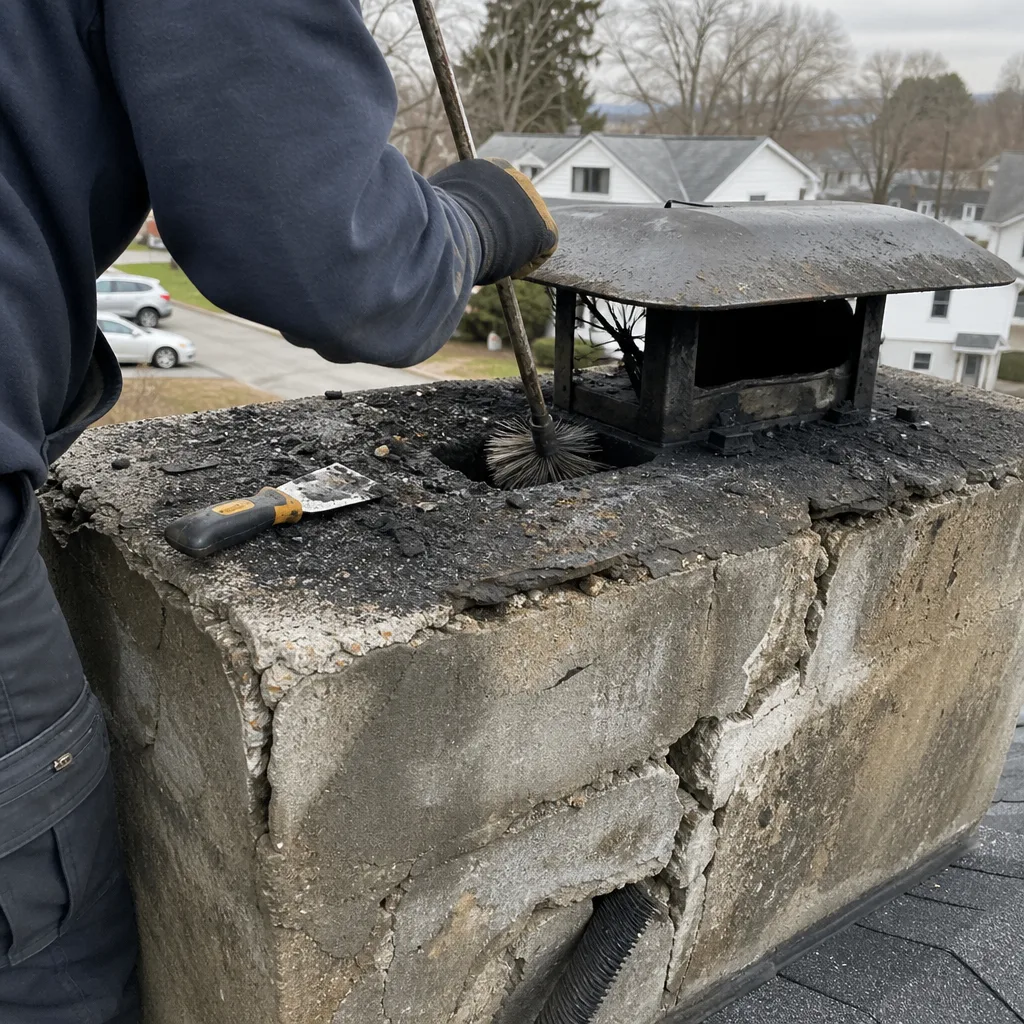 Before
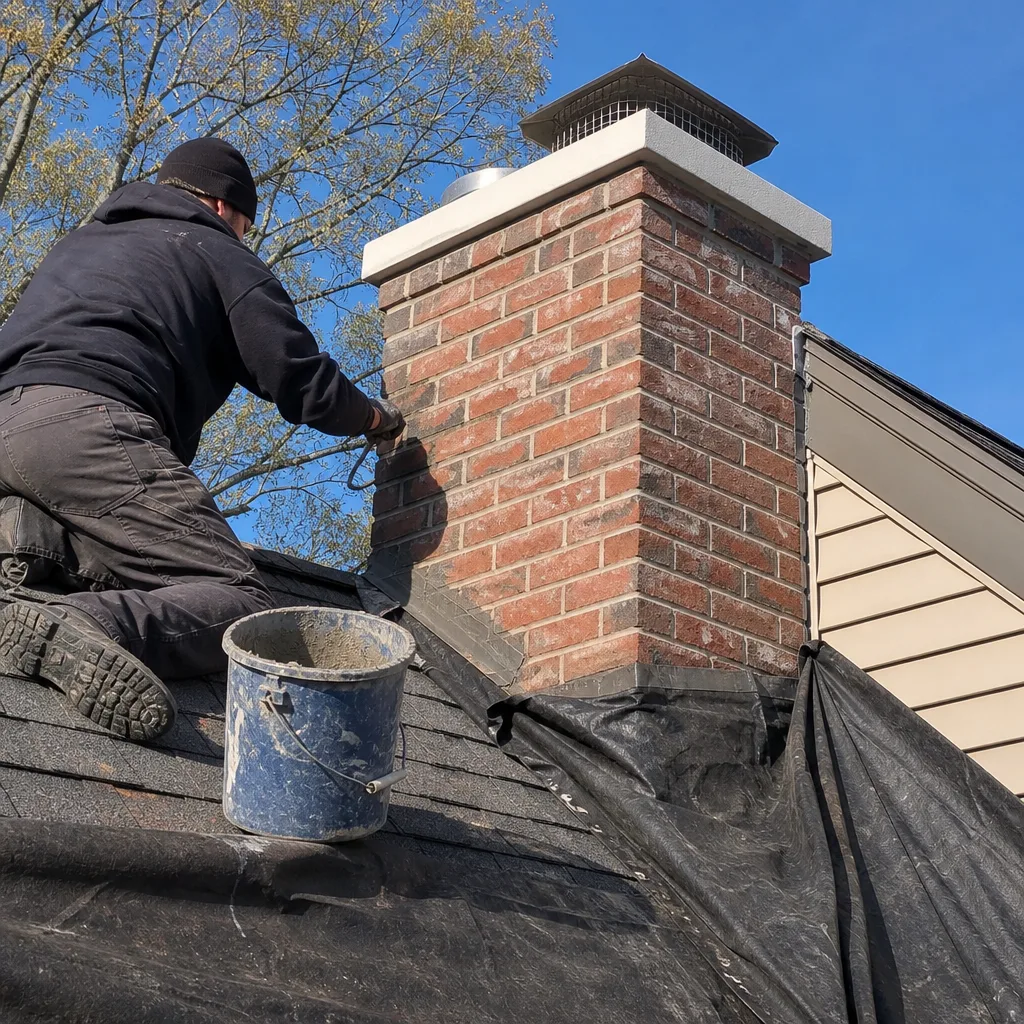 After
AfterHow to Hire a Chimney Cleaning Contractor in Attleboro: A Step-by-Step Guide
Massachusetts is one of only a handful of states with no licensing requirement for chimney sweeps. The person on your roof in Attleboro might have trained for years under a master sweep, or they might have bought a brush and a magnet sign last weekend. After 42 years in this trade, we’ve seen both. The difference between a craftsman and a corner-cutter isn’t price, and it isn’t even years in business. It’s whether they can answer four specific questions without reaching for a sales script. This guide shows you exactly what those questions are, how to interpret the answers, and how to protect yourself from the most common scam in our industry: the cheap cleaning that turns into a four-figure liner upsell. For Chimney Cleaning Cost Breakdown: The Attleboro Homeowner’s Reference for 2026 and related guidance, see our other resources.
Quick Answer
To hire a chimney cleaning contractor in Attleboro, verify CSIA certification, demand photo documentation of any recommended repairs, insist on a written estimate with line-item pricing, and confirm a specific written warranty before any work begins. Skip any contractor who cannot produce all four.
Table of Contents
- Why Massachusetts Has No Chimney Sweep License (And What That Means for You)
- The Four Questions That Separate Craftsmen from Corner-Cutters
- What CSIA Certification Actually Tests (And Why It Matters More Than Years in Business)
- How to Read a Written Estimate Like a Pro
- The Upsell Inspection Pattern (And How Photo Documentation Stops It)
- What a Real Warranty Says vs. What Vague Language Hides
- Attleboro-Specific Factors That Affect Your Chimney
- Common Mistakes to Avoid
- When to Call a Professional
- Frequently Asked Questions
- The Bottom Line
Why Massachusetts Has No Chimney Sweep License (And What That Means for You)
Plumbers need a license. Electricians need a license. Roofers need a license in Massachusetts. Chimney sweeps do not.
This is not a well-known fact among homeowners, and most contractors in Attleboro aren’t eager to advertise it. The Massachusetts Board of Building Regulations and Standards does not classify chimney sweeping as a restricted trade, so Chimney Cleaning Permits, Codes & Inspections in MA: What You Need to Know becomes essential reading. Anyone with a ladder and a brush can legally call themselves a sweep and start booking jobs. The only credential that carries any independent weight is voluntary certification through the Chimney Safety Institute of America, or CSIA.
What this means practically: the burden of verification falls entirely on you. There is no state board to complain to, no license number to look up, no bond to claim against if the work damages your home. A bad sweep in Attleboro faces the same regulatory consequences as a bad dog walker. Which is to say, none specific to the trade.
This regulatory gap has shaped the local market in predictable ways. Attleboro sits at the intersection of two major metro areas, Providence and Boston, which means a steady flow of transient operators who service the I-95 corridor without maintaining a local reputation. We’ve seen trucks with Rhode Island plates and New Hampshire phone numbers working the Highland Park neighborhood after a cold snap, then vanishing before the callbacks start. We’ve also seen one-truck operators who do honest, careful work but carry no insurance and have no process for documenting what they found inside your flue.
The absence of licensing does not mean all sweeps are unqualified. It means you must become your own regulator for twenty minutes before you hire one. The four questions below are your inspection checklist.
The Four Questions That Separate Craftsmen from Corner-Cutters
After four decades of hiring sweeps, training sweeps, and occasionally fixing what untrained sweeps broke, we’ve distilled the hiring decision into four questions. Ask them in this order. A qualified contractor will answer without hesitation. A corner-cutter will deflect, generalize, or turn the conversation to scheduling.
Question 1: Are you CSIA-certified, and can I verify the number?
CSIA certification requires passing a comprehensive exam on fire science, building codes, and safety standards, plus committing to continuing education. The certification number is public and verifiable on the CSIA website. A contractor who is certified will give you the number immediately. One who is not will say something like “I’ve been doing this twenty years” or “I learned from my father.” Experience without standardized training is not nothing, but it is not interchangeable with certification. Twenty years of doing something wrong is still wrong.
Question 2: Will you provide photos from inside the flue, and will you walk me through them?
This question exposes the upsell pattern described in detail below. A sweep who plans to find “problems” that require immediate expensive repairs will often resist documentation. Photos are your protection against fabricated damage. The contractor should use a chimney camera, show you the images on site or via email, and explain what you’re seeing in plain English. If they say “trust me, it needs a liner” without images, you are being sold, not served.
Question 3: What exactly will the written estimate include, and is the price fixed?
Vague verbal quotes are a hallmark of operators who plan to expand the scope once they’re on your roof. A written estimate should specify: the exact services to be performed, the materials to be used (including brand names where relevant), the total price, and the payment terms. At Hearthstone Chimney Co., our estimates include no-hassle upfront pricing, the number on the estimate is the number on the invoice. Any contractor who won’t commit to this in writing is reserving the right to charge more later.
Question 4: What does your warranty specifically cover, and for how long?
“Satisfaction guaranteed” sounds reassuring and means legally nothing. You want specific language: what work is covered, what constitutes a failure, who pays for the callback, and for what duration. Our Hearthstone Chimney Co. home page details the 90-Day Done Right Promise, in writing, no arguing. If a contractor cannot produce a written warranty with comparable specificity, they are not standing behind their work. They are hoping you won’t ask.
What CSIA Certification Actually Tests (And Why It Matters More Than Years in Business)
Homeowners in Attleboro often ask how long we’ve been in business, which is a reasonable instinct. But years in operation is a lagging indicator. A company can operate for decades with outdated techniques, or it can be three years old with every technician CSIA-certified and regularly retrained. The certification tells you what the contractor actually knows, not merely how long they’ve been collecting checks.
The CSIA Certified Chimney Sweep exam covers six domains:
- Technical knowledge of chimney and venting systems - construction, clearances, and compatibility with different appliance types
- NFPA 211 standards - the national code that governs chimney installation, maintenance, and repair
- Fire science and combustion - how creosote forms, why it matters, and the conditions that accelerate buildup
- Safety protocols - proper use of ladders, personal protective equipment, and contamination controls inside the home
- Inspection procedures - the three levels of inspection defined by NFPA 211, including Level 2 camera inspections
- Code compliance and clearances - the specific measurements and materials required for safe operation
The exam is not easy. The pass rate hovers around 60 percent, and certified sweeps must recertify every three years with continuing education. This matters in Attleboro because our housing stock spans three centuries. A chimney built in 1890 in the South Attleboro village area has different characteristics than a 1980s prefab fireplace in the Highland Park neighborhood. CSIA training prepares a sweep to recognize those differences and adjust accordingly. Years of cleaning only modern systems does not.
We’ve interviewed sweeps with fifteen years of experience who did not know that unlined masonry chimneys in pre-1950s Attleboro homes require specific evaluation under NFPA 211. Experience without structured education produces confidence without competence. Certification is the filter that separates the two.
How to Read a Written Estimate Like a Pro
A written estimate is not a formality. In the chimney trade, it is often the only document that prevents a $250 cleaning from becoming a $2,800 liner replacement. Here’s what a legitimate estimate includes, and what its absence signals.
The six elements of a defensible estimate
- Company name, address, and contact information - not just a phone number, but a physical address you could visit. PO boxes and suite numbers at virtual offices are common among transient operators.
- Date and expiration - prices for materials fluctuate, but an estimate without any time limit suggests the contractor is not serious about honoring it.
- Scope of work with specificity - “clean chimney” is insufficient. The estimate should state: sweep and inspect flue, Level 1 or Level 2 inspection, debris removal, and any additional services.
- Materials specified by brand or grade - if liner work is recommended, the estimate should name the product. We use professional-grade materials from trusted brands like HeatShield and Gelco, and we name them on every estimate. Generic “stainless steel liner” language allows substitution with inferior products.
- Total price with payment terms - the number on the estimate is the number on the invoice. No “plus materials” or “subject to conditions” escape clauses.
- Warranty reference - the estimate should cite the specific warranty or guarantee that applies, not vague assurances.
What the absence of any element signals: a missing address suggests the contractor is not locally established. Missing scope language creates wiggle room for upsells. Missing payment terms open the door to demands for large deposits or cash-only arrangements. Missing warranty language means the contractor has no formal process for handling failures.
In Attleboro, we’ve seen estimates that consist of a handwritten total on a carbon copy with no company name. We’ve seen estimates that describe “necessary repairs” without identifying what was inspected or how. A proper estimate documents accountability. Its absence documents evasion.
The Upsell Inspection Pattern (And How Photo Documentation Stops It)
This is the most common consumer complaint in the chimney industry, and it thrives in markets like Attleboro where many homeowners use their fireplaces infrequently and cannot independently assess the condition of their flue.
The pattern works like this: a contractor advertises a chimney cleaning for $99, sometimes less. The sweep arrives, performs a cursory sweep, then announces that the flue is “unsafe” and requires immediate liner replacement, typically quoted at $1,800 to $4,000. The homeowner, who has never seen inside their chimney, feels pressured by the safety implication and agrees. The sweep collects a deposit and schedules the work, or in aggressive versions, begins demolition immediately.
Sometimes the liner genuinely needs replacement. Often it does not. The $99 cleaning was never the business model. It was the customer acquisition cost for a high-margin upsell.
Photo documentation is the single most effective defense. Here’s how to use it:
- Ask before booking - “Will you be taking photos inside the flue, and will you show them to me before recommending any repairs?” A contractor planning the upsell pattern will often deflect or say photos “aren’t necessary for a basic cleaning.”
- Request the camera inspection protocol - a Level 2 inspection, required by NFPA 211 when a system is being changed or after a chimney fire, includes camera documentation of the entire flue interior. If your contractor recommends liner replacement after a Level 1 visual inspection, that is insufficient.
- Get a second opinion on any repair over $500 - we offer a Free Second Opinion on any written estimate. A legitimate contractor welcomes comparison. One running the upsell pattern will pressure you to decide immediately, often citing “safety” or “insurance requirements” that do not exist.
At Hearthstone Chimney Co., our Chimney Cleaning & Sweep in Attleboro includes Level-2 camera inspections that end with photos the homeowner can see and a plain-English verdict, documented like an engineer, explained like a craftsman. We’ve had Attleboro homeowners bring us photos from another contractor showing “cracked flue tiles” that were actually mortar joints, or “gaps” that were normal construction tolerances. Photos you can see, a plain-English verdict. Without both, you’re buying on faith.
What a Real Warranty Says vs. What Vague Language Hides
Warranty language in the chimney trade ranges from meticulously specific to deliberately meaningless. Understanding the difference protects you from contractors who treat guarantees as marketing rather than obligation.
Vague language and what it actually means
- “Satisfaction guaranteed” - No defined standard of satisfaction, no specified remedy, no time limit. Legally unenforceable in most disputes.
- “We stand behind our work” - Sentiment without structure. What work? Under what conditions? For how long? At whose cost?
- “Lifetime warranty” - Whose lifetime? The company’s? The product’s? Yours? Often limited to manufacturing defects in materials the contractor did not produce, rendering it a pass-through of limited value.
- “Fully insured” - Insurance protects the contractor, not necessarily you. Ask for a certificate of insurance naming you as additional insured if significant work is planned.
What a legitimate warranty specifies
Our 90-Day Done Right Promise, backed in writing with no paperwork and no arguing, specifies: the exact work covered, the standard for “done right,” the process for reporting a concern, the timeline for response, and the remedy (we come back, at our cost, until it meets the standard). It is governed by our K.E.Y.S. values code: Krafted right, Every time, Your home first, Standing behind it.
When evaluating any contractor’s warranty, look for these elements:
- Duration with start date - from completion of work, from payment, from inspection?
- Covered components - labor, materials, or both? If materials, are they the contractor’s workmanship or the manufacturer’s product?
- Trigger conditions - what must happen for the warranty to apply? A leak? A performance failure? Your subjective dissatisfaction?
- Remedy process - who do you call, how quickly do they respond, who pays for the callback?
- Exclusions - all warranties have them, but they should be stated, not buried.
A contractor who cannot produce a warranty document with this specificity is not offering protection. They are offering rhetoric. In a trade with no state licensing, the warranty is often your only recourse. Treat it accordingly.
Attleboro Specific Factors That Affect Your Chimney
Attleboro’s geography, climate, and building stock create conditions that a generic sweep from out of state may not recognize. For Seasonal Chimney Cleaning Care for Attleboro: Year-Round Homeowner’s Guide and related advice, local knowledge matters in ways that affect both inspection findings and maintenance recommendations.
Climate and creosote
Attleboro sits in a transitional climate zone with cold, damp winters and humid summers. The moisture content in our air affects creosote formation. Burning improperly seasoned wood in a humid climate produces more creosote than the same wood burned in a drier region. We’ve cleaned chimneys in the Bungay Lake area where the flue was glazed with third-degree creosote after a single burning season because the homeowner was burning wood stored outdoors without adequate drying time. A sweep unfamiliar with local humidity patterns might attribute this to overuse rather than fuel moisture.
Building age and construction type
The city contains significant pre-1950 housing stock, particularly in the historic districts and older village centers. These homes often have unlined masonry chimneys built before modern flue liner standards. An unlined chimney is not automatically unsafe, but it requires evaluation against current codes and may need relining if the appliance type has changed. We’ve inspected 1920s colonials in Attleboro where a previous owner had installed a high-efficiency insert without relining, creating a potential carbon monoxide hazard that a visual inspection alone would miss. Level-2 camera inspection is essential in these properties.
Local fuel practices
Attleboro’s proximity to rural Massachusetts and Rhode Island means many homeowners source firewood locally, often from oak and maple stands. These hardwoods burn well when seasoned but produce significant creosote when green. Softwoods like pine, common in less informed purchasing, compound the problem. A local sweep should ask about your fuel source and storage conditions, not just your burning frequency.
Neighborhood-specific considerations
Homes near the Ten Mile River watershed and lower-lying areas of South Attleboro experience higher groundwater and more foundation settling. This can affect chimney alignment and create gaps between the chimney structure and the building envelope. We’ve found separations in ranch-style homes from the 1960s and 1970s where seasonal freeze-thaw cycles have stressed the chimney footing. A sweep who only looks up may miss what’s happening at the base.
For Chimney Repair in Attleboro, these local factors inform every recommendation we make. Generic advice from a contractor servicing ten towns across two states rarely captures this granularity.
Common Mistakes to Avoid
- Hiring based on price alone. The lowest quote in Attleboro often signals a loss-leader cleaning designed to generate repair upsells. A fair price for a certified sweep with proper insurance and documentation runs higher than the $99 specials, and it’s worth it.
- Assuming all sweeps are licensed. Massachusetts has no chimney sweep license. CSIA certification is voluntary and verifiable. Ask for the number and check it.
- Skipping the written estimate. Verbal agreements leave no record of what was promised. A contractor who won’t put terms in writing is planning flexibility you don’t want them to have.
- Ignoring the warranty details. “Satisfaction guaranteed” is not a warranty. Read the actual document before work begins, not after something goes wrong.
- Booking without asking about photo documentation. If a contractor recommends repairs without showing you images from inside the flue, you have no way to verify the need. This is how the upsell pattern succeeds.
- Neglecting local knowledge. A sweep who doesn’t ask about your home’s age, your fuel source, or your burning habits is performing a transaction, not an inspection. Attleboro’s housing stock and climate deserve specific attention.
- Waiting for visible problems. Chimney issues often manifest first as performance problems - smoking, odors, slow drafting - or not at all until a chimney fire or carbon monoxide event. Annual inspection catches conditions before they become emergencies.
When to Call a Professional
Certain conditions require immediate professional evaluation, not routine scheduling. Call a certified sweep promptly if you notice smoke entering your living space, a strong tar or creosote odor during burning, visible cracks in exterior masonry, white efflorescence staining on the chimney exterior, rust on the damper or firebox, or debris falling into the fireplace. These symptoms indicate active problems that worsen with use.
Even without symptoms, the National Fire Protection Association recommends annual inspection of all chimney systems, and cleaning as needed based on creosote accumulation. In Attleboro’s climate with typical hardwood burning, most active fireplaces need sweeping every cord of wood burned, or annually for regular use.
Hearthstone Chimney Co. offers free estimates in Attleboro. A Level-2 inspection with camera documentation takes about ninety minutes and ends with photos you can see, a plain-English verdict, and a written estimate with no-hassle upfront pricing. Call (508) 545-9737 to schedule. We’ll be there when we say.
Frequently Asked Questions
A certified chimney sweep in Attleboro typically costs between $250 and $400 for a standard cleaning with Level 1 inspection, and $350 to $550 for a Level 2 inspection with camera documentation. Prices below this range often indicate a loss-leader model designed to generate repair upsells. Call (508) 545-9737 for an exact quote - estimates are free.
You need a new liner only if your existing flue is damaged, improperly sized for your appliance, or missing entirely. A certified sweep should prove this with camera images showing cracks, gaps, or deterioration, and explain the specific code requirement that applies to your system. Never accept a liner recommendation without photographic evidence and a written explanation. Call (508) 545-9737 for a second opinion on any written estimate.
The National Fire Protection Association recommends annual inspection for all chimney systems, with cleaning frequency determined by creosote accumulation rather than calendar time. In Attleboro’s humid climate with typical oak or maple burning, most active fireplaces need cleaning after each cord of wood burned, or at minimum once per burning season. Call (508) 545-9737 to schedule an inspection and we’ll advise based on your specific use.
Skipped maintenance leads to creosote buildup, which increases chimney fire risk, and undetected damage, which can allow carbon monoxide intrusion or structural deterioration. In Attleboro’s older housing stock with unlined masonry chimneys, the consequences escalate faster than in modern construction. The cost of prevention is always lower than the cost of remediation after a fire or poisoning event. Call (508) 545-9737 for a free estimate.
No. Massachusetts does not require any license or certification for chimney sweeps. CSIA certification is voluntary but represents the only nationally recognized standard for technical competence in the trade. We recommend verifying any contractor’s CSIA number before booking. Call (508) 545-9737 and we’ll provide ours immediately.
Our $89 Seasonal Tune-Up includes a Level 1 inspection, basic sweep of the flue, damper check, and firebox evaluation, with written documentation of findings. It does not include camera inspection, which is reserved for Level 2 protocols when conditions warrant. For Fireplace Services in Attleboro, including full Level-2 documentation, call (508) 545-9737 for details and scheduling.
The Bottom Line
Hiring a chimney contractor in Attleboro comes down to four verifications: CSIA certification you can check, photo documentation you can see, a written estimate you can hold, and a warranty you can enforce. The absence of any one is a signal to keep looking. The trade has no state licensing to protect you, so your diligence is the only filter between a craftsman and a corner-cutter. Done right, and we stand behind it. That’s not a slogan. It’s the standard we’ve worked to for over 42 years. Explore more guides & resources to protect your home.
Written by Russell Haines, Owner at Hearthstone Chimney Co., serving Attleboro since 2014.