
Last updated September 10, 2026
Level 1 sweep and inspection to the NFPA 211 annual standard - flue, crown, cap, and flashing checked and photographed
Chimney sweep logs do not sweep chimneys. They loosen some creosote - which then falls where a brush and vacuum still have to collect it.
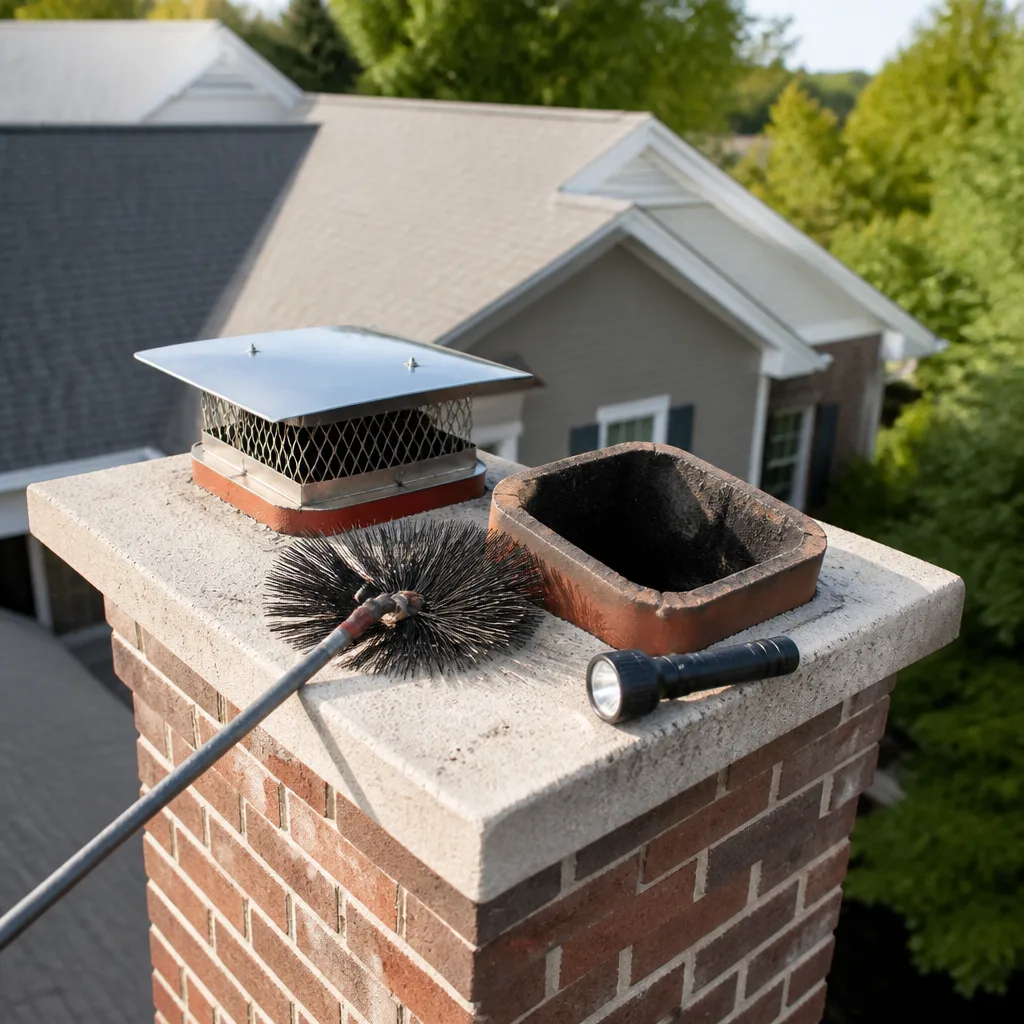
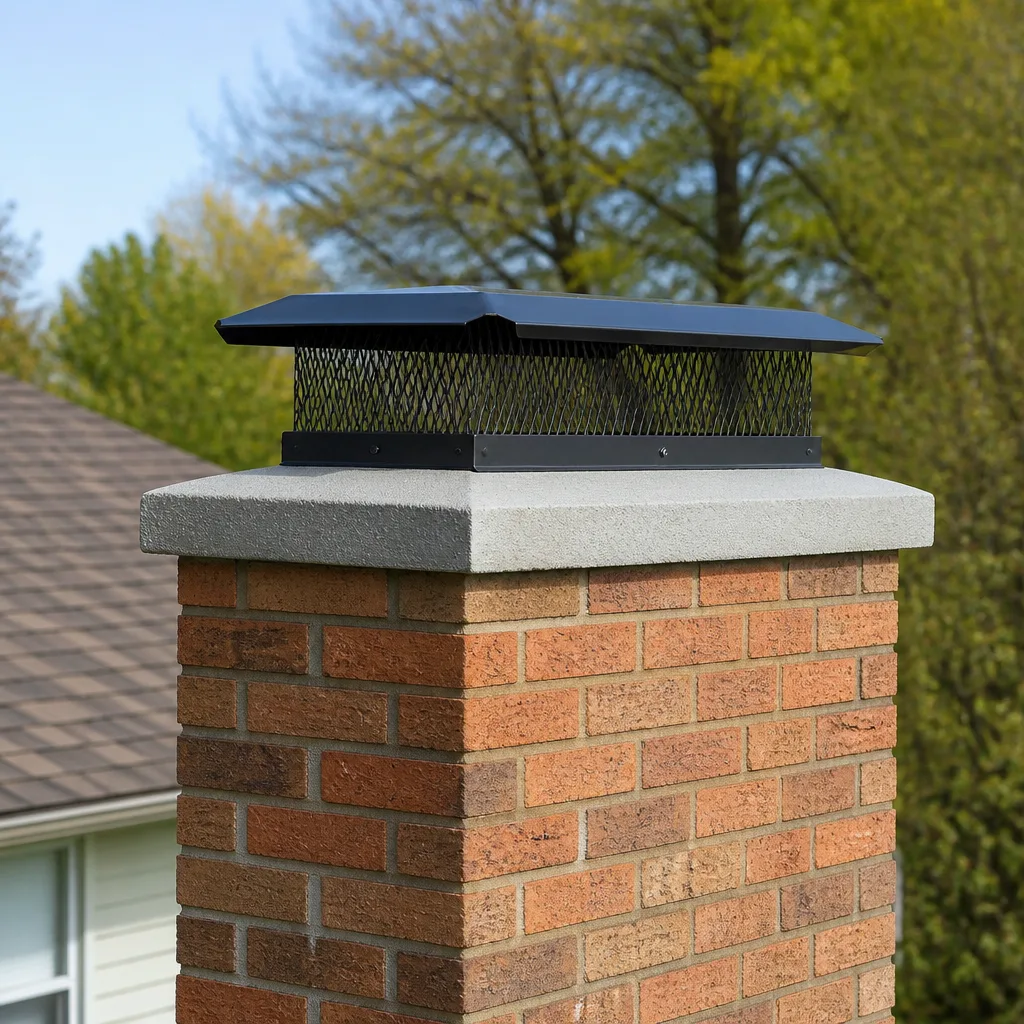
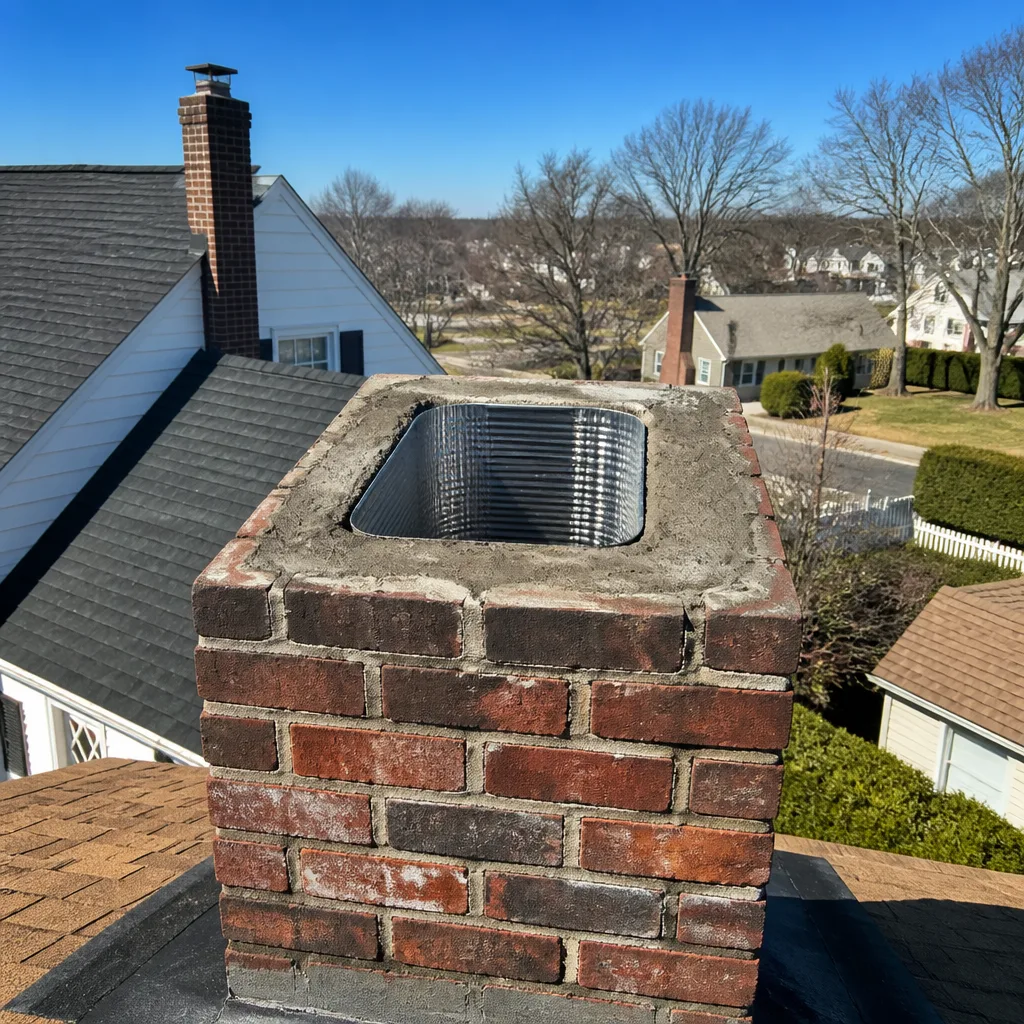
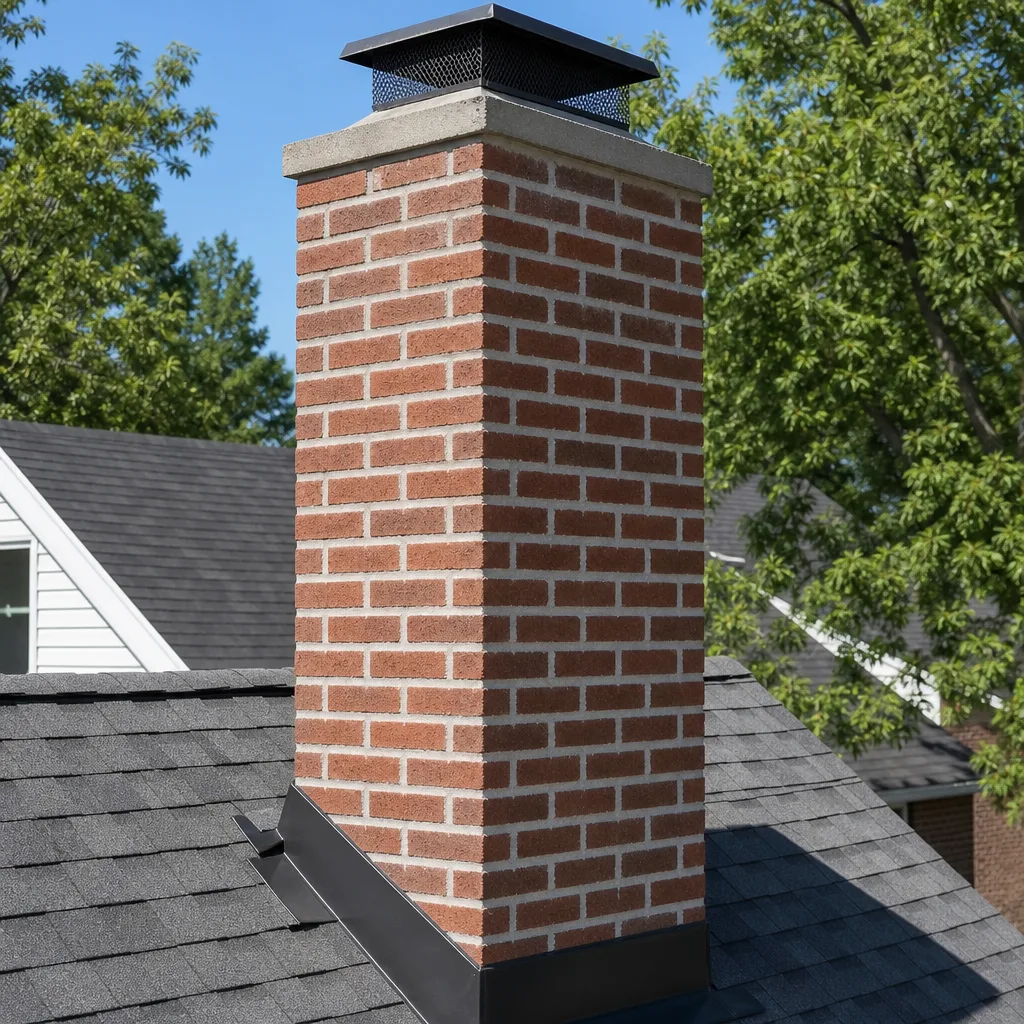
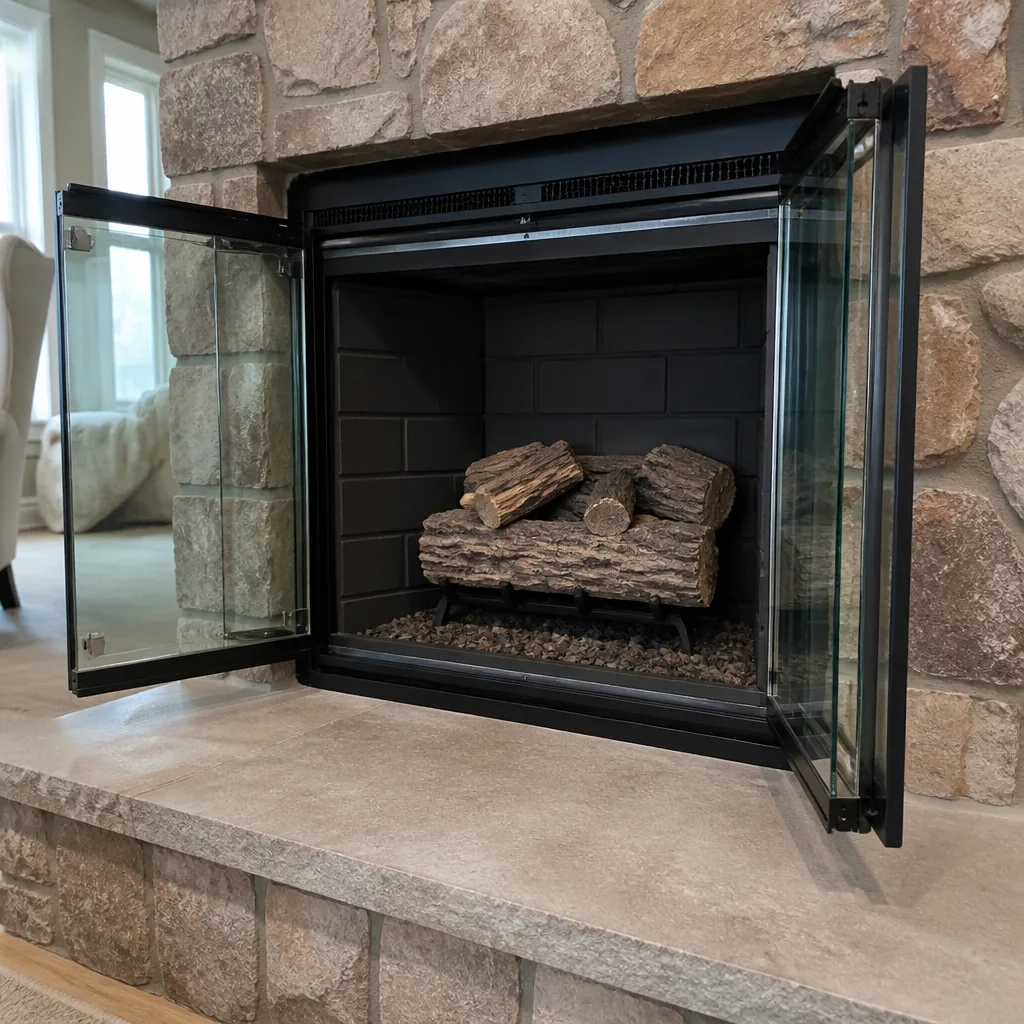
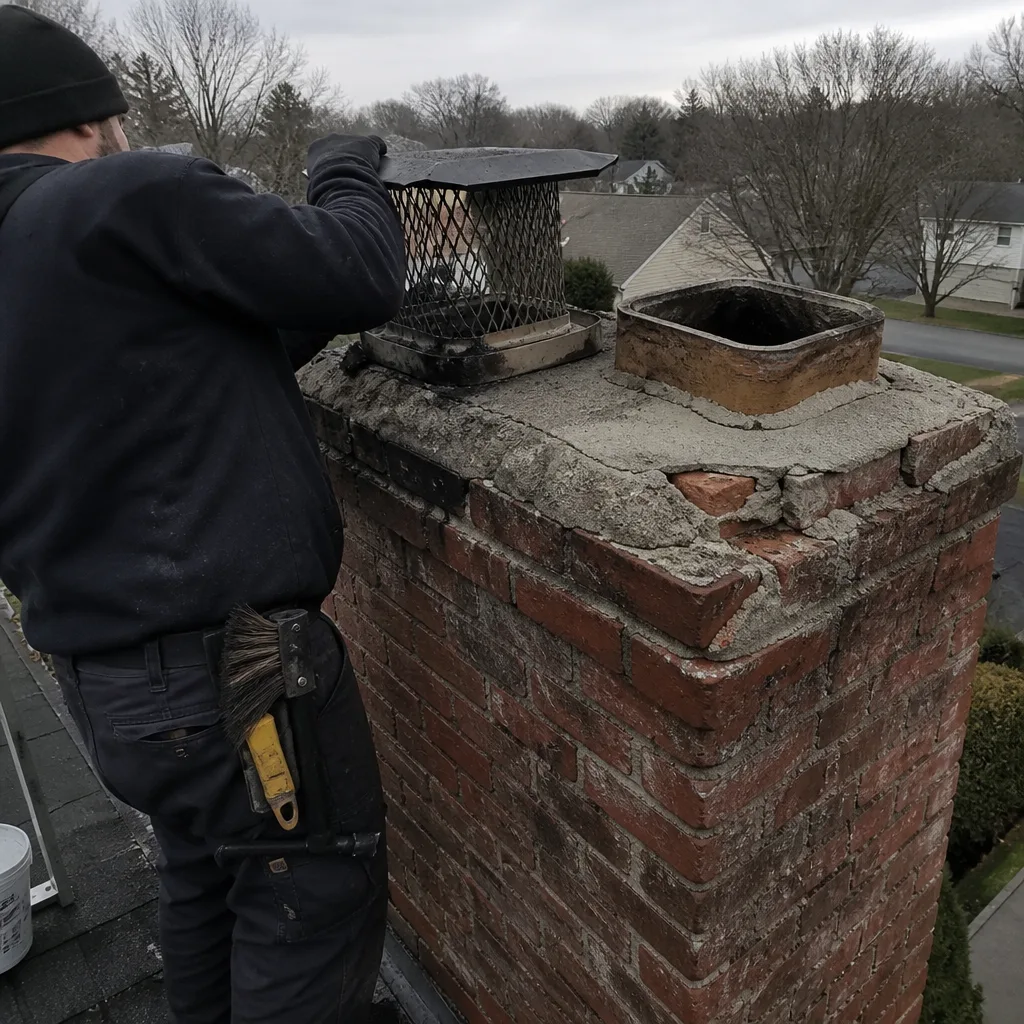 Before
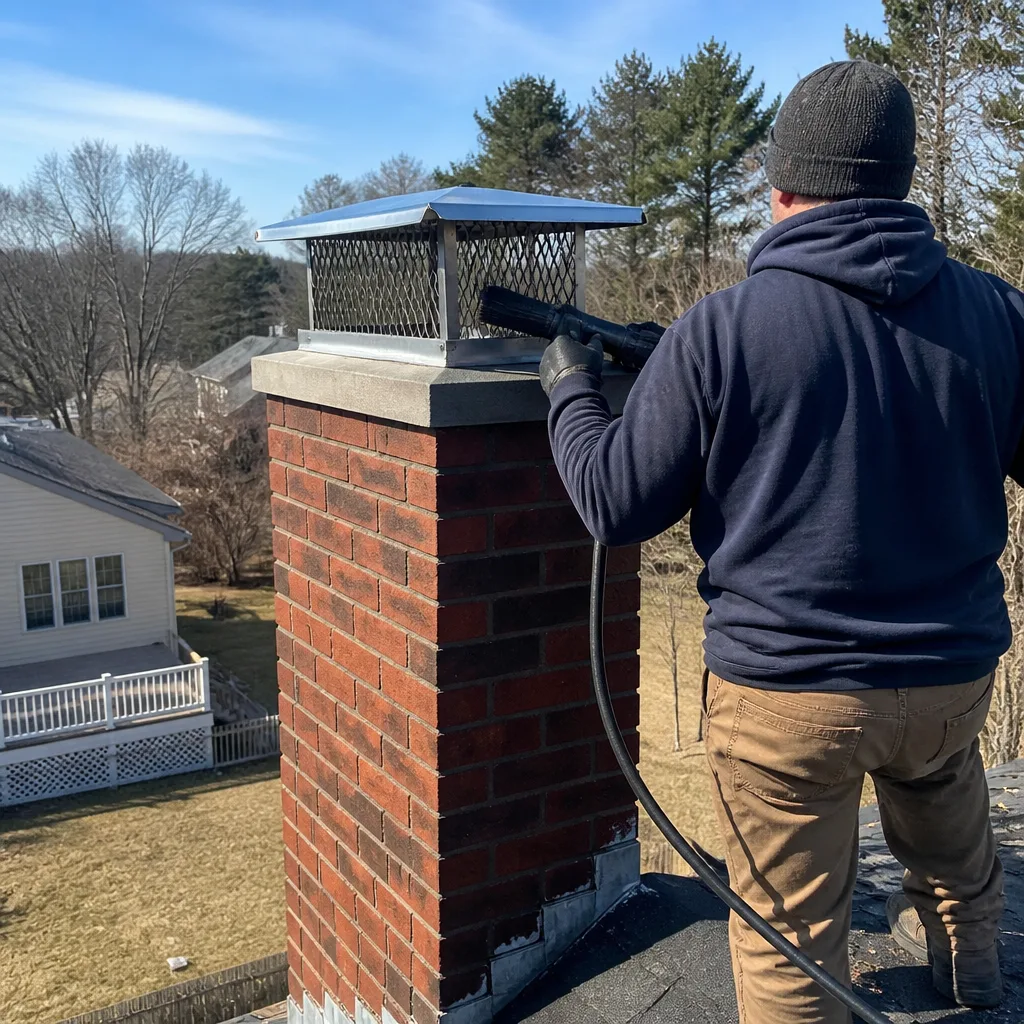 After
After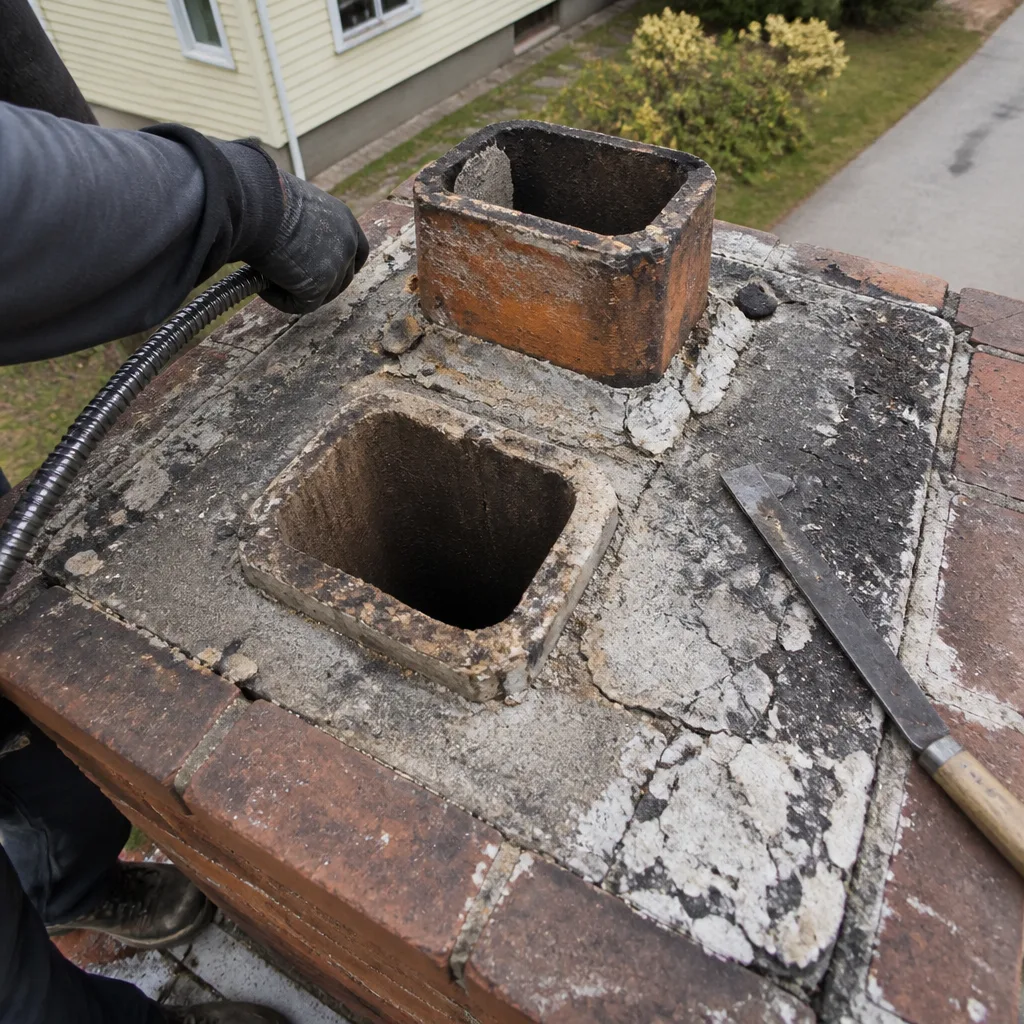 Before
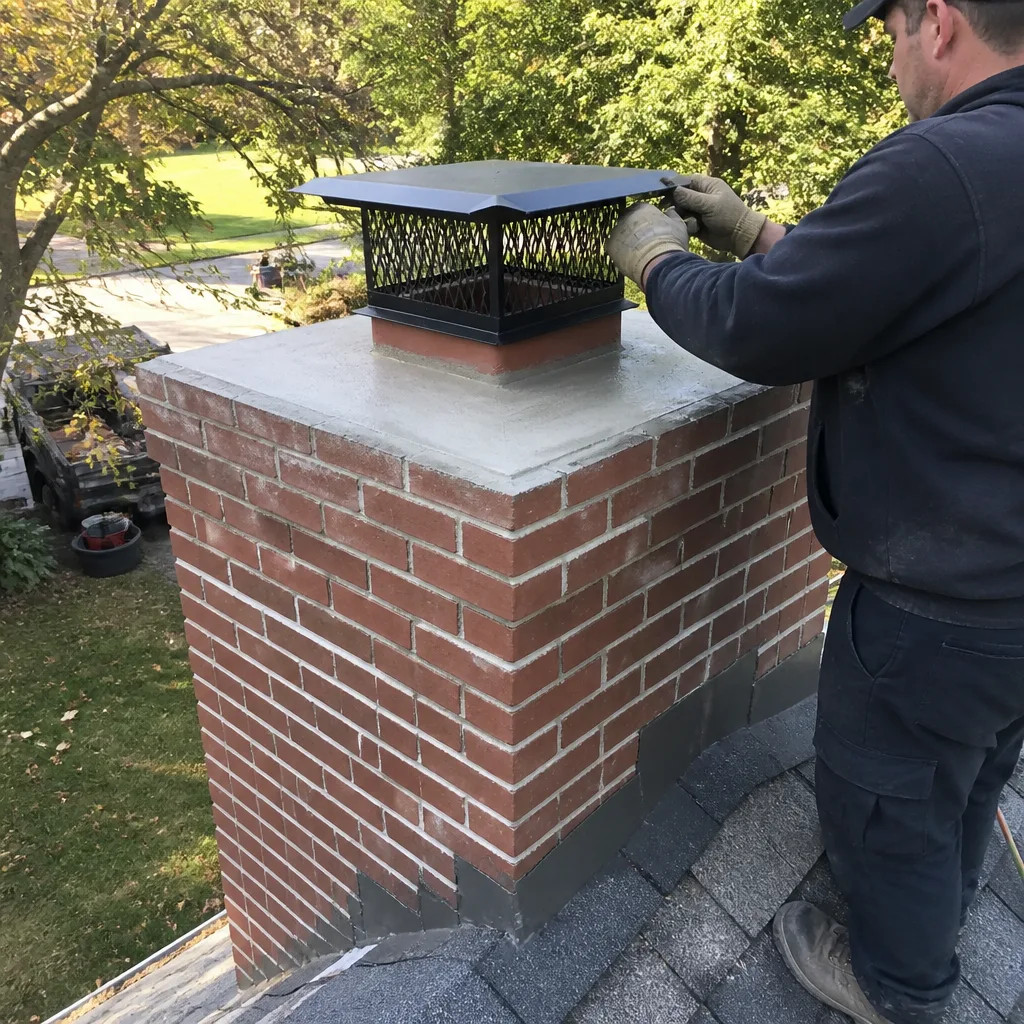 After
After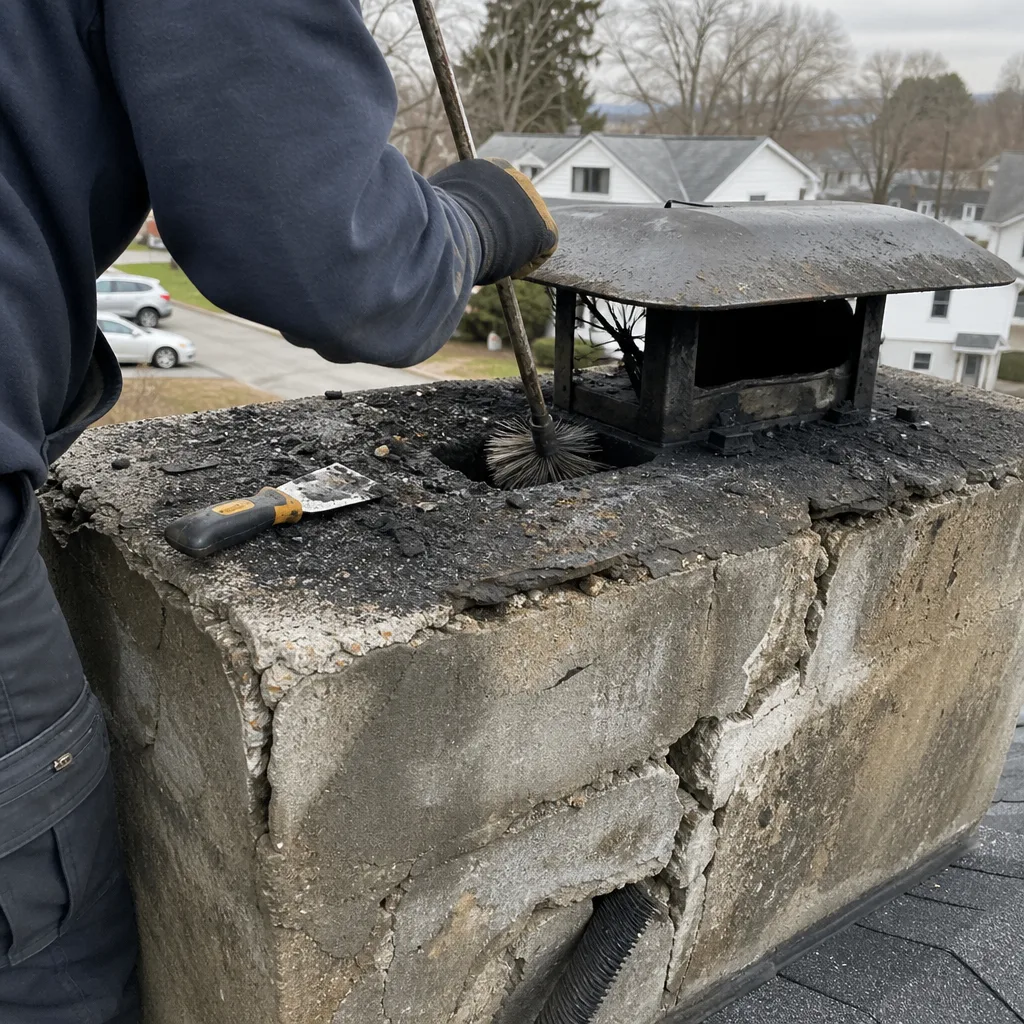 Before
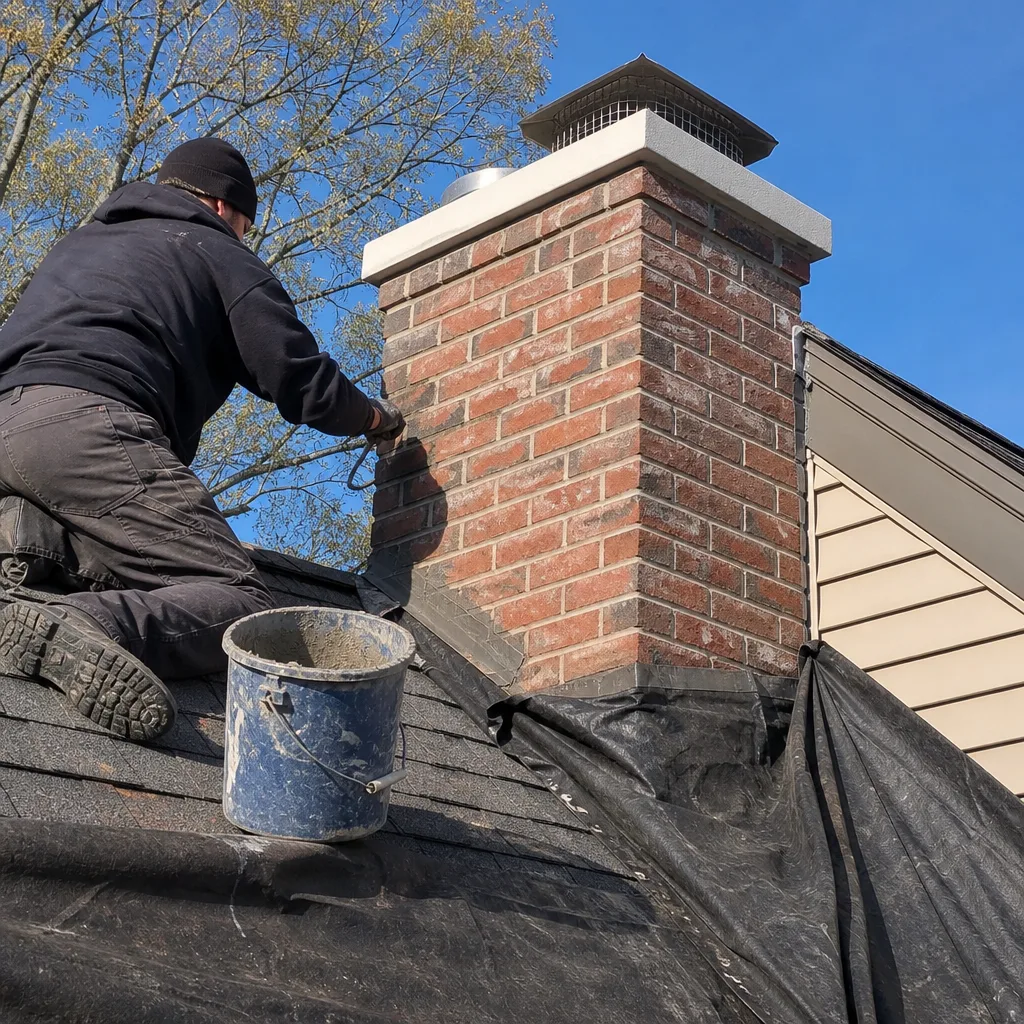 After
AfterChimney Cleaning Warning Signs: A Attleboro Homeowner’s Reference Guide
The most common thing we hear after a chimney fire or carbon monoxide event in Attleboro is not surprise. It’s recognition. The homeowner smelled something off in October. They noticed white staining on the brick that spring. The fire just didn’t draw right last winter, but they lit it anyway. These signs are quiet, easy to explain away, and almost always visible months before the problem becomes expensive or dangerous. This guide catalogs what we’ve learned in 42 years of sweeping chimneys in Bristol County - the smells, stains, sounds, and draft behaviors that separate a routine cleaning from an emergency call.
Quick Answer
A chimney in Attleboro needs professional attention when you notice persistent tar-like odors, white mineral staining on exterior brick, smoke rolling back into the room, or a fire that struggles to establish a draft. These signs indicate creosote buildup, moisture intrusion, or blockage - conditions that worsen through our wet winters and can lead to chimney fires or carbon monoxide exposure if ignored. See our DIY vs Professional Chimney Cleaning: The Attleboro Homeowner’s Decision Guide to assess whether you can address minor issues yourself.
Table of Contents
- Warning Signs by Urgency: Stop Using, Schedule Soon, or Note for Next Inspection
- The Three Odor Signatures Every Attleboro Homeowner Should Know
- What White Staining on Your Brick Really Means
- Draft Problems: Blockage, Liner Failure, or Something Simpler?
- Outside Warning Signs: What Your Roofline and Walls Are Telling You
- How Attleboro’s Climate Accelerates Chimney Damage
- Common Mistakes to Avoid
- When to Call a Professional
- Frequently Asked Questions
- The Bottom Line
Warning Signs by Urgency: Stop Using, Schedule Soon, or Note for Next Inspection
Not every warning sign demands the same response. We’ve organized what we see in Attleboro homes into three tiers. This helps you act appropriately without unnecessary alarm, and without the dangerous opposite - waiting too long.
Stop Using the Fireplace Now
These conditions present immediate risk of fire or carbon monoxide exposure. Do not light another fire until a Level-2 inspection is completed.
- Smoke entering the living space during normal operation. This indicates a blocked flue, damaged liner, or negative pressure problem that can worsen without warning. In our experience across Attleboro neighborhoods from Hebronville to South Attleboro, this often traces to collapsed clay tile liners in homes built before 1980.
- Visible flames or glowing material in the chimney exterior. This is an active chimney fire. Evacuate and call emergency services.
- Carbon monoxide detector activation near the fireplace. Even low-level alerts warrant immediate professional evaluation. The flue may be partially blocked or the liner compromised.
- Strong petroleum or asphalt odor during burning. This signals advanced creosote glazing, which ignites at lower temperatures and burns intensely.
Schedule Within Two Weeks
These conditions worsen predictably and can escalate to the “stop using” category if ignored through burning season.
- Persistent musty or damp smell even when dry outside. Moisture is actively entering the system. In Attleboro’s freeze-thaw climate, this accelerates liner deterioration and mortar decay.
- White or gray powder on interior firebox walls. This is efflorescence inside the chimney, indicating water migration through the masonry.
- Fire requires excessive kindling or newspaper to start. Draft resistance has increased, often from partial blockage or damper corrosion.
- Animals or nesting debris visible at the flue top. Squirrels, raccoons, and starlings are active year-round in Attleboro’s mature neighborhoods. Partial blockages restrict airflow and can ignite.
- Rust flakes or orange staining in the firebox. Water is reaching metal components. This compromises the damper and can deteriorate connector pipes.
Note for Next Scheduled Inspection
These warrant documentation and monitoring but do not require immediate service if the fireplace is otherwise performing normally.
- Minor mortar erosion on exterior chimney face, less than one-quarter inch deep
- Slight discoloration of exterior brick without powdery deposits
- Occasional downdraft on particularly windy days only
- Minor soot accumulation on glass doors after extended burning periods
We document these findings during every Chimney Cleaning & Sweep in Attleboro and track changes year over year. What seems stable can shift quickly after a hard winter.
The Three Odor Signatures Every Attleboro Homeowner Should Know
Smell is the most underutilized diagnostic tool in chimney maintenance. Homeowners in Attleboro often tell us something “smelled different” months before they called. The problem is that “different” covers three distinct conditions with three distinct solutions. Learning to distinguish them can save you from unnecessary work or from missing a serious problem.
Odor One: Sharp, Tar-Like, or Asphalt Smell
This is creosote in its advanced stages. Fresh creosote smells smoky and familiar. Glazed creosote, which forms when combustion byproducts condense on cool flue surfaces over repeated burns, develops a sharp, chemical edge. You’ll notice it most when the fireplace has not been used for several days and outdoor temperatures rise, causing the deposits to off-gas.
In Attleboro, we see this frequently in homes with exterior chimneys on north-facing walls, where the masonry stays cold and promotes condensation. The odor intensifies in spring when homeowners open windows and the stack effect reverses. If you smell this, creosote glazing is present and removal requires mechanical brushing, often with chemical modifiers. Standard sweeping of loose soot is not sufficient.
Odor Two: Musty, Damp, or Earthy Smell
This indicates active moisture intrusion. The smell may resemble a basement after heavy rain or old leaves. It persists even during dry spells because water is trapped inside the masonry structure, cycling through freeze and thaw.
Attleboro receives approximately 48 inches of precipitation annually, with significant winter snowfall and spring rains. Chimneys without proper crown overhangs or with deteriorated flashing are particularly vulnerable. The musty smell often appears before visible staining because the moisture is migrating through porous brick and evaporating at the interior surface. Left unaddressed, this condition destroys liner integrity from the outside in.
Odor Three: Ammonia or Fecal Smell
This is animal occupation. Raccoons, squirrels, and chimney swifts are common in Attleboro’s established neighborhoods with mature oak and maple canopies. The ammonia smell indicates active or recent nesting. Fecal odor suggests accumulation over time.
Beyond the obvious blockage risk, animal waste is acidic and accelerates metal liner corrosion. We have removed nests that completely filled the flue in homes near Capron Park and the Bungay River corridor, where tree cover is densest. If you detect this odor, do not attempt to light a fire to “smoke them out.” Evacuation of animals and nest removal must precede any burning, and the flue requires inspection for damage the animals may have caused.
Our Fireplace Services in Attleboro include thorough odor assessment during every inspection. We identify the source, explain what it means, and document it with photos you can see.
What White Staining on Your Brick Really Means
Efflorescence is the white, powdery deposit that appears on masonry surfaces. Homeowners often mistake it for weathering, salt from road treatment, or simply aging. It is none of these. Efflorescence is soluble salts carried to the surface by water moving through the masonry. Its presence proves that water is actively migrating through your chimney structure. The question is how far the damage has progressed by the time you can see it.
Stage One: Surface Efflorescence
Light, brushable powder that reappears after cleaning. At this stage, water is entering but has not yet caused significant internal damage. The salts are drawn from the mortar and brick themselves. In Attleboro, we see this most on chimneys with failed crown wash or inadequate chimney cap coverage. The solution is addressing the water entry point and monitoring.
Stage Two: Crystalline Buildup
Hard, crusty deposits that resist brushing. This indicates repeated wet-dry cycling and begins to compromise mortar porosity. The masonry is losing its ability to breathe and dry. Freeze-thaw damage accelerates from this point. We’ve observed this stage commonly in Attleboro’s pre-1950 housing stock, where original lime mortar has been repointed with harder Portland cement mixes that trap moisture.
Stage Three: Spalling and Delamination
The brick face flakes away, exposing softer interior material. This is structural damage. Water has penetrated, frozen, expanded, and fractured the brick. Spalling cannot be reversed. Individual bricks must be replaced, and the water source eliminated, or the deterioration continues behind any cosmetic repair.
The critical insight: efflorescence visible on the exterior means water has already traveled through the entire wall thickness. For a standard four-inch wythe of brick, that water has passed through insulation, past the liner clearance zone, and is actively cooling the flue gases. This promotes creosote condensation on the interior while destroying the exterior. Both problems worsen each other.
During Chimney Repair in Attleboro, we use camera inspection to assess interior damage that exterior staining predicts. The correlation is strong: significant efflorescence almost always corresponds to liner deterioration or missing mortar joints inside the flue.
Draft Problems: Blockage, Liner Failure, or Something Simpler?
A fire that doesn’t draw properly frustrates every homeowner. The instinct is often to open the damper wider, build the fire hotter, or crack a window. These adjustments sometimes mask the problem temporarily but never fix it. Understanding what type of draft failure you’re experiencing determines whether you need a simple adjustment or major repair.
Slow Startup: The Fire Struggles to Catch
If kindling burns but logs smolder and smoke lingers in the firebox before rising, the flue is likely cold or partially obstructed. Cold flue syndrome is common in Attleboro’s unlined or exterior chimneys, particularly in homes from the 1920s through 1950s. The solution is pre-warming the flue with a rolled newspaper torch or installing a liner that maintains temperature.
Partial obstruction from creosote buildup produces similar symptoms but worsens progressively. The difference: cold flue syndrome is worst at season start and improves as the masonry warms. Obstruction worsens throughout burning season. A Level-2 camera inspection distinguishes them conclusively.
Smoke Rollback: Smoke Enters the Room After Initial Draw
This is the most dangerous pattern. The fire establishes initially, then smoke reverses direction, often when adding fuel or as the fire dies to coals. Causes include:
- Blockage below the point of reversal. Creosote buildup, collapsed liner, or animal nest creates a partial dam. As flue gas velocity drops, smoke backs up.
- Liner failure with displacement. Clay tile liners can shift, creating a ledge that traps gases until pressure overcomes it, then releases a surge of smoke.
- House depressurization. Modern weatherization, exhaust fans, and HVAC systems can create negative pressure that overwhelms chimney draft. This is increasingly common in Attleboro as older homes receive energy upgrades without combustion air provision.
Intermittent Puffing or Unstable Flame
Downdrafts caused by wind patterns, nearby structures, or inadequate chimney height produce irregular flame behavior. The fire may draw well on calm days and smoke on windy ones. In Attleboro’s South Coast location, prevailing southwest winds interact unpredictably with chimneys shorter than surrounding rooflines. A properly sized chimney cap with wind-directional features, such as those from Famco and Copperfield, often resolves this without liner replacement.
Damper-Only Issues
Not every draft problem is flue-related. Rusted, warped, or improperly seated dampers restrict airflow even when fully open. The cast-iron throat dampers in many Attleboro homes have corroded after decades of moisture exposure. A top-sealing damper, properly installed, often improves draft more than flue modifications. We evaluate damper function during every inspection and recommend replacement only when repair is impractical.
Our technicians carry Gelco and Olympia Chimney components for common damper and cap replacements, completing most jobs in a single visit with no-hassle upfront pricing.
Outside Warning Signs: What Your Roofline and Walls Are Telling You
Most homeowners only inspect their chimney from the hearth side. The exterior tells a different, often earlier story. Several critical warning signs are only visible from outside, and they frequently appear before interior symptoms develop.
Ceiling Stains Near the Chimney Breast
Brown or yellow discoloration on plaster or drywall adjacent to the chimney stack indicates flashing failure or crown deterioration. Water is entering at the roof intersection and migrating laterally. In Attleboro’s cape and colonial housing stock, chimneys often pass through the center of the roof with complex cricket or saddle flashings that are difficult to inspect from the ground. By the time staining appears inside, the sheathing and framing have been wet through multiple cycles.
We document these stains during interior inspection and correlate them with exterior findings. The repair is rarely just interior patching. Without addressing the water source, stains return within one season.
Deteriorating Mortar Visible from Ground Level
Receded mortar joints, loose bricks, or visible gaps in the coursing compromise structural integrity and create water entry paths. From the street, look for horizontal lines of missing mortar, particularly at the shoulder where the chimney narrows to the flue. In Attleboro, we’ve found that chimneys on the weather side of homes - typically northwest exposures - show accelerated deterioration. The combination of driving rain and freeze-thaw cycles extracts mortar at twice the rate of protected faces.
Tuckpointing arrests this damage when caught early. Delay permits water to reach the interior wythe, where freeze-thaw spalling becomes inevitable. We match original mortar composition where possible, using appropriate lime content for pre-1940 masonry to maintain breathability.
Rusted, Missing, or Improperly Sized Chimney Caps
The chimney cap is the most cost-effective protective component and the most commonly neglected. A proper cap extends beyond the flue tile edges, includes mesh sides for ventilation with animal exclusion, and sheds water away from the crown. Rusted galvanized caps, common in older Attleboro homes, eventually fail and often drop into the flue, creating blockage.
Missing caps invite direct water entry, animal access, and debris accumulation. We install stainless steel and copper caps from Copperfield and Famco with lifetime warranties against rust-through. The investment typically pays for itself in prevented damage within three to five years.
Crown Cracks and Deterioration
The concrete crown seals the chimney top between the flue tile and the brick edge. Crown wash, a thinner cementitious coating, is not a substitute. Cracks in the crown permit water to saturate the top courses of brick, where freeze-thaw damage is most severe because the masonry is fully exposed and temperature-cycles most extremely.
Hairline cracks can be sealed with flexible crown repair compounds. Structural cracks or deterioration requiring rebuild are common on chimneys more than 25 years old in Attleboro’s climate. We assess crown condition from the roof during every inspection and explain whether sealing, resurfacing, or rebuild is appropriate.
How Attleboro’s Climate Accelerates Chimney Damage
Chimney systems in southeastern New England face specific stresses that accelerate deterioration compared to drier or more temperate regions. Understanding these local factors helps explain why warning signs appear when they do, and why maintenance intervals may need adjustment from generic national recommendations.
Freeze-Thaw Cycling
Attleboro averages 30 to 40 freeze-thaw cycles annually, with temperatures crossing 32°F repeatedly through winter and spring. Each cycle, water in masonry expands approximately 9% in volume. The cumulative mechanical stress exceeds the tensile strength of standard brick and mortar within several years of active water intrusion. This is why a chimney that appeared sound in autumn can show spalling by spring.
Maritime Moisture Influence
Proximity to Narragansett Bay and the Ten Mile River watershed maintains higher ambient humidity than inland Massachusetts locations. Masonry dries more slowly, prolonging the window for moisture-related damage. Homes within two miles of the water, including sections of South Attleboro and Hebronville, show measurably faster mortar deterioration than comparable construction in drier microclimates.
Heating Degree Days and Burn Patterns
Attleboro accumulates approximately 5,500 heating degree days annually. Fireplaces and wood stoves in primary or supplemental use experience extended burn seasons, increasing creosote accumulation rates. The EPA recommends annual inspection for fireplaces in regular use; in Attleboro’s climate, we observe that supplemental wood heat users often underestimate their actual burn hours and corresponding maintenance needs.
Snow Load and Ice Dam Interaction
Chimneys near roof valleys or below significant snow accumulation points receive concentrated meltwater during thaw events. Ice dams, common in Attleboro’s older housing with inadequate attic insulation, can direct water against chimney flashings from uphill, overwhelming designed drainage paths. We inspect for ice dam staining and flashing compromise during spring assessments, often finding damage that winter-only users never observed.
These climate factors inform our recommendations but never become excuses for deferred maintenance. A properly built and maintained chimney withstands Attleboro’s conditions indefinitely. The problems we encounter almost always trace to original construction shortcuts, previous repair failures, or neglected routine care. For more guides & resources on protecting your chimney through Attleboro’s demanding climate, explore our blog.
Common Mistakes to Avoid
- Assuming a gas fireplace needs no chimney maintenance. Gas appliances produce corrosive condensation and can block vents with debris. The chimney still requires inspection, though cleaning intervals may extend.
- Judging chimney condition by firebox appearance alone. The firebox is the most accessible and often most recently repaired component. Liner damage, crown failure, and exterior deterioration proceed independently.
- Using chimney cleaning logs as a substitute for professional sweeping. These products may reduce loose soot but do not remove glazed creosote and provide no inspection of structural or liner conditions. They can also create a false sense of security.
- Hiring based on the lowest quote without verifying scope. In Attleboro’s competitive market, some operators quote for “sweeping” that excludes inspection, excludes the smoke chamber, or uses inadequate equipment for glazed deposits. A proper Level-2 inspection with camera documentation takes time and carries cost.
- Ignoring seasonal timing. Calling in October for pre-winter service often means waiting weeks. Schedule in spring or summer when technicians have availability and can address problems before burning season pressure.
- Deferring cap or crown repair because “it’s not leaking yet.” By the time interior leakage is detectable, structural damage is established. Exterior prevention is always less expensive than interior repair.
- Failing to verify that previous repairs used compatible materials. We’ve found Portland cement repointing over original lime mortar, aluminum liners in gas applications rated only for oil, and other material mismatches that accelerate rather than prevent deterioration. Ask what was used and why.
When to Call a Professional
Call a certified chimney professional when you observe any sign in the “stop using” category above, when odors persist beyond a single burn cycle, or when draft behavior changes from established patterns. Annual inspection is the baseline for any wood-burning system in regular use; more frequent evaluation is warranted for primary heating appliances, recently purchased homes with unknown maintenance history, or systems more than 25 years old.
In Attleboro, Hearthstone Chimney Co. offers free estimates with no obligation. We’ll inspect your system, show you what we find with camera documentation you can see, and provide a plain-English verdict on what needs attention now, what can wait, and what to monitor. Our 90-Day Done Right Promise covers every job in writing - if it’s not right, we make it right, no paperwork and no arguing. Call (508) 545-9737 to schedule. A live person answers 24 hours a day, 7 days a week.
Frequently Asked Questions
A standard chimney cleaning and Level-1 inspection in Attleboro typically ranges from $200 to $350, depending on accessibility, creosote condition, and whether the system is a straightforward fireplace or a more complex stove or insert installation. Level-2 inspections with camera documentation run $350 to $500 and are recommended for real estate transactions, suspected damage, or systems that have experienced chimney fires or significant weather events. Hearthstone Chimney Co. provides no-hassle upfront pricing - the number on the estimate is the number on the invoice. Call (508) 545-9737 for an exact quote; estimates are free.
The National Fire Protection Association recommends annual inspection for all chimney systems, with cleaning frequency determined by use and fuel type. In Attleboro’s climate, wood-burning fireplaces and stoves in regular use typically require annual sweeping; gas systems benefit from biennial inspection; and oil-fired systems should be inspected annually with cleaning as indicated by soot accumulation. Homes with exterior chimneys, older construction, or previous moisture problems may need more frequent monitoring regardless of use pattern.
Clay tile liners in good condition can be cleaned indefinitely. Replacement becomes necessary when tiles are cracked, displaced, missing, or glazed with creosote that cannot be mechanically removed. Stainless steel liners are installed when original clay is damaged or when converting fuel types. We never recommend liner replacement without camera evidence you can see yourself, and we’ll tell you plainly when a damaged liner can be monitored rather than immediately replaced. Our Level-2 inspection includes photos and a written verdict with no pressure to proceed.
Skipped maintenance permits creosote accumulation, which increases chimney fire risk and can reach ignition stage within a single season of heavy use. Moisture intrusion proceeds unchecked, causing liner deterioration, mortar decay, and eventual structural compromise. Carbon monoxide hazards develop as flue gases leak through cracked liners or missing mortar into living spaces. In Attleboro, we’ve responded to chimney fires in homes that skipped two or more seasons of inspection, and the damage is always more extensive and expensive than routine prevention would have cost. The 90-Day Done Right Promise cannot apply to damage that preventive maintenance would have avoided.
Summer odor intensification occurs because the stack effect reverses in warm weather, drawing air down the chimney into the house rather than exhausting it upward. Humidity activates creosote deposits and any accumulated organic material. The smell is not new; it’s always present but previously vented upward. A thorough cleaning removes the source, and a proper chimney cap with ventilation screening reduces moisture entry that activates residual odors. In Attleboro’s humid summers, this is one of the most common calls we receive in June and July.
Homeowners can and should observe exterior condition, monitor draft behavior, and note odors or visual changes. However, internal flue inspection requires specialized camera equipment and training to interpret findings. The accessible firebox and damper represent less than 20% of the system. Professional inspection according to NFPA 211 standards evaluates the entire chimney structure, liner, connector pipes, and clearance to combustibles. In our experience across Attleboro, homeowner-visible signs almost always understate the actual condition documented by camera inspection.
The Bottom Line
Chimney warning signs are quiet by nature. The tar smell you notice in October, the white powder on brick you photographed last spring, the fire that needed extra newspaper - these are not quirks of an aging house. They are your chimney’s vocabulary, and it is speaking before the problem becomes urgent. The homeowners who call us in time get a cleaning, perhaps a cap, maybe some pointed mortar. The ones who wait often need liner replacement, structural rebuild, or worse. In 42 years serving Attleboro and surrounding communities, the pattern has never changed: attention to early signs is the difference between maintenance and repair. We’re here when you’re ready to listen to what your chimney is telling you.
Written by Russell Haines, Owner at Hearthstone Chimney Co., serving Attleboro since 2014.